



Businesses now scale faster with remote support, but one question always comes first: What is the real virtual assistant cost today? Pricing varies widely by country, skill level, hiring model, and workload. Understanding these differences helps you budget accurately and choose a setup that maximizes virtual assistant ROI without overspending.
This complete guide covers how VA pricing works across companies, regions, skills, and hiring models, and provides insider insights on budgeting, ROI, and selecting the most cost-effective virtual assistant for your workflow.
Virtual Assistant Cost Comparison Chart (Top Companies)
Top Virtual Assistant Companies: Cost Analysis & Value Breakdown
The top virtual assistant companies differentiate themselves not only through service quality and specialization but also through how they structure pricing, manage labor efficiency, and deliver cost predictability to clients. Below is a cost-focused evaluation of the most reputable virtual assistant providers and how their pricing strategies shape total value for businesses.
1. Hire Overseas (Global) – Cost Efficiency Built Through Multi-Country Talent Pools
Hire Overseas operates across multiple regions, which allows them to optimize labor cost by matching each role to the most cost-efficient talent market. Their approach reduces overhead for clients who need specialized support without paying domestic rates.
Cost Insight
By distributing hiring across the Philippines, Sri Lanka, South Africa, and Latin America, Hire Overseas reduces market bottlenecks that often inflate VA pricing. Their model often eliminates common hidden expenses like benefits, technology, and turnover replacement—helping businesses maintain consistent monthly budgets regardless of role complexity.
Ideal for: Companies needing predictable monthly costs and role-specific pricing flexibility.
2. Boldly (USA) – Premium Pricing Driven by Employment Classification
Boldly uses a subscription model built around U.S.-based, W-2 employed assistants. Their cost positioning is shaped by U.S. labor regulations, higher compensation requirements, and full employment benefits.
Cost Insight
Because Boldly hires their assistants as full employees, their pricing incorporates benefits, compliance, and paid training. This results in premium rates where businesses pay for employment stability and high retention rather than hourly productivity alone.
Ideal for: Companies prioritizing U.S. labor compliance and long-term assistant retention.
3. Time Etc (UK) – Structured Bundles Built for Smaller Budgets
Time Etc focuses on a credit-based structure, where clients purchase blocks of hours. This pricing format helps keep cost predictable for smaller businesses that may not need full-time help.
Cost Insight
The bundle approach allows clients to lock in reduced effective hourly rates by committing to higher monthly hour counts. Their pricing intentionally incentivizes long-term usage, helping small teams forecast expenses with minimal fluctuation.
Ideal for: Founders who want stable monthly costs without long-term contracts.
4. Prialto (USA) – Managed Teams That Increase Cost Through Oversight Layers
Prialto integrates multiple layers of management—including team leads, workflow specialists, and quality supervisors. This overhead raises cost but improves consistency in large-scale operations.
Cost Insight
Prialto’s cost structure reflects operational redundancy. Clients pay not just for an assistant but also for the administrative ecosystem surrounding that assistant. This increases the monthly investment but reduces operational risk, especially for enterprise teams.
Ideal for: Companies willing to pay a premium for multi-person support systems.
5. Virtudesk (Philippines & USA) – Mid-Tier Pricing Through Hybrid Coordination
Virtudesk blends offshore labor with U.S.-based operational oversight. This hybrid model is designed to provide a balance between offshore cost savings and onshore quality control.
Cost Insight
Virtudesk’s pricing is influenced by their use of both domestic and offshore talent. Offshore assistants allow rates to remain affordable, while U.S. oversight introduces a slight markup compared to typical offshore-only providers.
Ideal for: Businesses needing offshore affordability with U.S. communication standards.
6. Belay (USA) – High-Ticket Services Backed by Domestic Talent Pools
Belay focuses exclusively on U.S.-based assistants, particularly for high-trust roles such as executive support and bookkeeping. Their cost structure reflects domestic talent competition and the premium placed on confidentiality.
Cost Insight
Costs are driven by U.S. labor market dynamics, where skilled executive assistants command high compensation. Belay passes this cost through a subscription model that ensures assistants remain engaged for long-term support relationships.
Ideal for: Executives who want domestically sourced assistants with minimal onboarding overhead.
7. Athena (Philippines) – Premium Offshore Pricing Through Intensive Training
Athena invests heavily in systematic training, habit coaching, and productivity methodologies. These training costs increase their pricing compared to standard offshore firms.
Cost Insight
Athena’s cost model prioritizes training scalability. Instead of minimizing expenses, they amplify upfront investment in assistant readiness. Clients pay more than traditional offshore rates, but the assistant arrives fully trained in executive decision support frameworks.
Ideal for: Leaders who want a highly trained offshore EA rather than basic administrative support.
8. Wing Assistant (Global) – Platform-Driven Pricing Based on Usage and Role Type
Wing uses software infrastructure to reduce administrative costs while scaling support across multiple departments like SEO, eCommerce, and sales outreach.
Cost Insight
Their pricing is influenced by automation. The more clients rely on Wing’s built-in tools, the lower their effective labor cost becomes. Clients essentially pay for a combination of human output and software assistance, which reduces task-based inefficiency.
Ideal for: Fast-growing teams that want human assistants paired with automation.
9. MyTasker (India) – Low-Cost Labor Market With Multi-Person Team Support
MyTasker leverages India’s cost advantages while assigning multiple specialists to each account. Clients pay lower rates but benefit from collective expertise.
Cost Insight
Their cost efficiency comes from distributing tasks among a team rather than relying on a single assistant. This approach makes labor more scalable without increasing hourly rates, allowing clients to access multiple skill sets under one budget.
Ideal for: Cost-conscious businesses needing flexible skill coverage.
10. Pepper Virtual Assistants (Philippines) – Long-Standing Provider With Stable Mid-Market Pricing
Pepper maintains consistent pricing by operating with well-established hiring channels and long-term VA retention strategies. Their experience reduces turnover, which keeps client costs stable.
Cost Insight
Pepper remains cost-competitive because they avoid surge pricing. Their long operational history in the Philippines allows them to maintain stable compensation structures for assistants while providing predictable monthly rates for clients.
Ideal for: SMEs wanting steady offshore pricing without premium markups.
Read more: Deep dive into the top virtual assistant companies and how they compare.
How to Decide Which Virtual Assistant Option Is Right for Your Budget
Choosing the right VA model means matching your budget with your workload, support needs, and expectations for management oversight. Below is a company-specific guide to help you identify which providers fit your operational and financial goals.
Choose Offshore Providers If…
- You want the lowest cost per hour
- You need full-time or ongoing support across admin, operations, or back-office roles
- You value long-term scalability without high overhead
- Your tasks are process-driven and repeatable
Why this option works: Offshore providers deliver the strongest ROI for teams that want predictable cost and long-term staffing at a fraction of domestic rates.
Best company matches: Hire Overseas, Pepper Virtual Assistants, MyTasker, Athena
Choose Domestic Providers If…
- You need assistants aligned with U.S. or UK time zones, culture, and communication norms
- Your work requires confidentiality, compliance, or industry-specific experience
- You’re willing to pay premium rates for employment-backed professionals
- You prefer lower onboarding friction and assistants who adapt quickly to your workflows
Why this option works: Domestic providers are ideal for executives or teams dealing with sensitive information or high-level tasks where experience outweighs cost considerations.
Best company matches: Boldly, Belay, Time Etc (US/UK talent)
Choose Hybrid (U.S.-Managed + Offshore Talent) If…
- You want offshore pricing with U.S.-style management and communication
- You need structured oversight, performance monitoring, or a formal escalation process
- You want guaranteed replacements, QA, and reliable coverage
You prefer a middle-ground between cost savings and professional management
Why this option works: Hybrid firms give you better quality control than pure offshore providers while staying more affordable than domestic-only companies.
Best company matches: Virtudesk, Prialto, Wing Assistant
Choose Tech-Enabled Platforms If…
- You want automation tools to streamline workflows and reduce manual hours
- You manage fast-changing workloads or multi-department support needs
- You want subscription-based pricing with predictable monthly output
- You prefer a centralized platform instead of standalone assistants
Why this option works: Platforms blend software efficiency with human support, lowering your effective cost by minimizing repetitive work.
Best company matches: Wing Assistant
Key Takeaway: The smartest VA investment aligns your needs with the most efficient talent market, where multi-region sourcing often leads to lower costs and easier scaling.
Part-Time vs. Full-Time Virtual Assistant: What You Actually Save
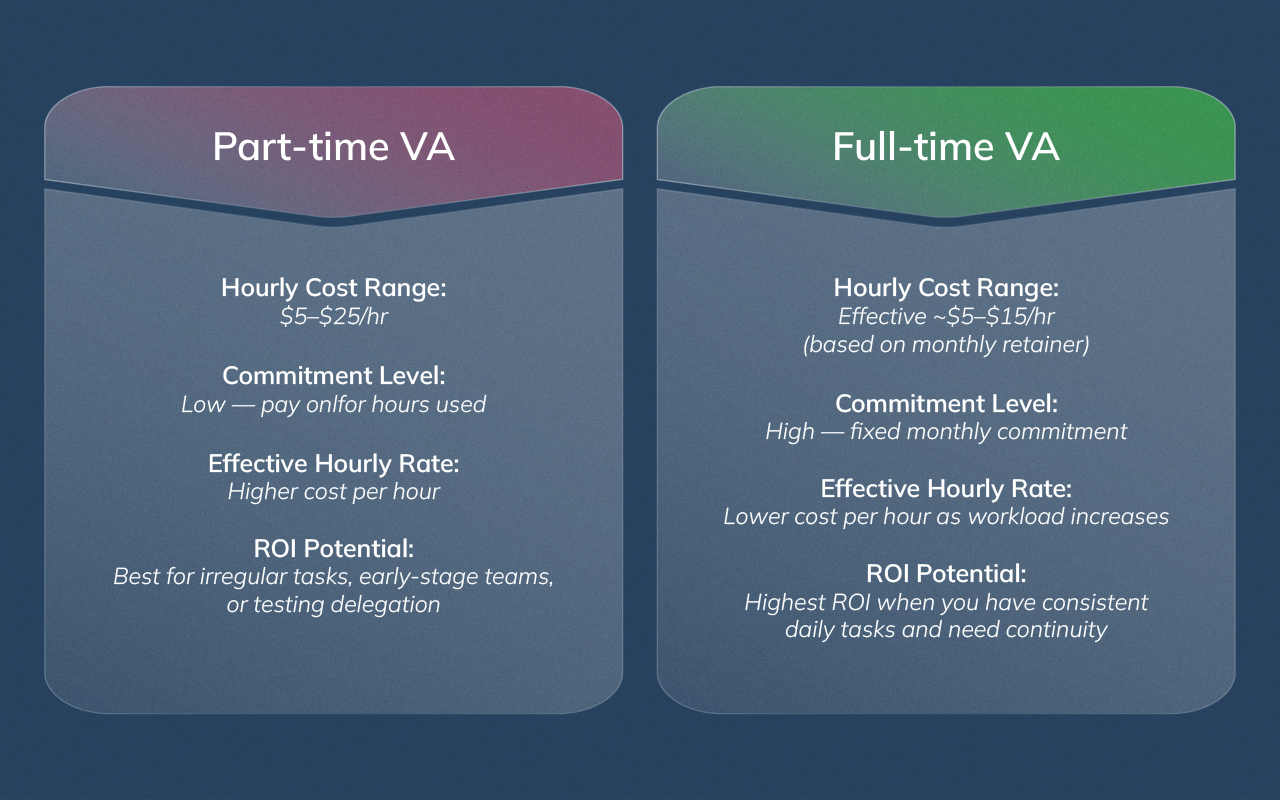
Choosing between a part-time or full-time virtual assistant impacts not only your monthly budget but also how efficiently you remove operational bottlenecks. The right structure depends on your task volume, role complexity, and how much continuity your workflows require.
Part-Time Virtual Assistant Cost
Part-time virtual assistants typically charge $5–$25 per hour, depending on the region and skill level. They are ideal for founders and small teams managing fluctuating workloads because you only pay for the hours you actually use.
Cost Advantages
- No long-term commitment or fixed labor cost
- Perfect for task-based or seasonal support
- Allows businesses to experiment with delegation before scaling
- Reduces overhead because you avoid full-time employment expenses
Best For
Early-stage teams, startups validating their workflow needs, or leaders needing coverage a few times per week rather than daily execution.
Full-Time Virtual Assistant Cost
Full-time assistants are generally priced on a monthly retainer, commonly $900–$3,500+ depending on the country and specialization. While the upfront cost is higher than part-time support, the effective hourly rate drops significantly once task volume increases.
Cost Advantages
- Lower cost per hour compared to part-time rates
- Allows for deeper process ownership and long-term productivity gains
- Reduced onboarding friction as the assistant becomes embedded in your operations
- Higher ROI for teams with consistent or high-volume work
Best For
Businesses with stable operations, ongoing administrative demands, customer-facing functions, or leaders needing daily support and proactive execution.
Freelance vs. Agency Virtual Assistant Cost
The cost of a virtual assistant also depends on whether you hire a freelancer directly or work through an agency. Both models have financial tradeoffs tied to quality control, management overhead, and scalability.
Freelance Virtual Assistant Cost
Freelancers usually range from $5–$30 per hour, with rates determined by their location, experience, and niche skills. Freelancing platforms offer vast global talent pools, but the cost savings come with added responsibility for the client.
Cost Characteristics
- Lower hourly rates due to minimal overhead
- Flexible hiring for short-term or specialized projects
- No markup for management or quality assurance
However, businesses absorb hidden costs such as:
- Training and onboarding
- Performance monitoring
- Backup planning during absences
- Replacements when freelancers churn or disappear
Freelancers are ideal when cost minimization is the priority and the business has internal capacity to manage ongoing oversight.
Agency Virtual Assistant Services Cost
Agencies typically price between $8–$60 per hour, depending on region, specialization, and service tier. This pricing includes infrastructure such as training, supervision, and workflow systems.
Cost Characteristics
- Higher hourly cost due to managed service layers
- Access to pre-vetted, professionally trained assistants
- Built-in replacements and continuity planning
- Compliance, payroll, and HR handled by the agency
Agencies usually deliver higher consistency because they absorb the managerial and operational overhead that businesses would otherwise handle internally.
Best For
Teams that want predictable service quality, clear escalation paths, and minimal risk—even if the hourly rate is higher than hiring freelancers directly.
How to Decide Which Model Delivers Better ROI
Understanding the cost landscape across VA companies is only half the equation. Your ROI also depends on matching that information with the right hiring model for your workload and operational goals.
Choose part-time or freelancers if:
You want maximum flexibility, lower upfront cost, or only need support for specific projects or irregular tasks.
Choose full-time or agency-supported VAs if:
You want stability, predictable output, stronger processes, and assistants who integrate deeply into your operations.
Key Takeaway: The cost-efficient choice is not always the cheapest—it's the model that removes the most friction while keeping your workload consistently moving forward.
Virtual Assistant Salary Comparison by Skill
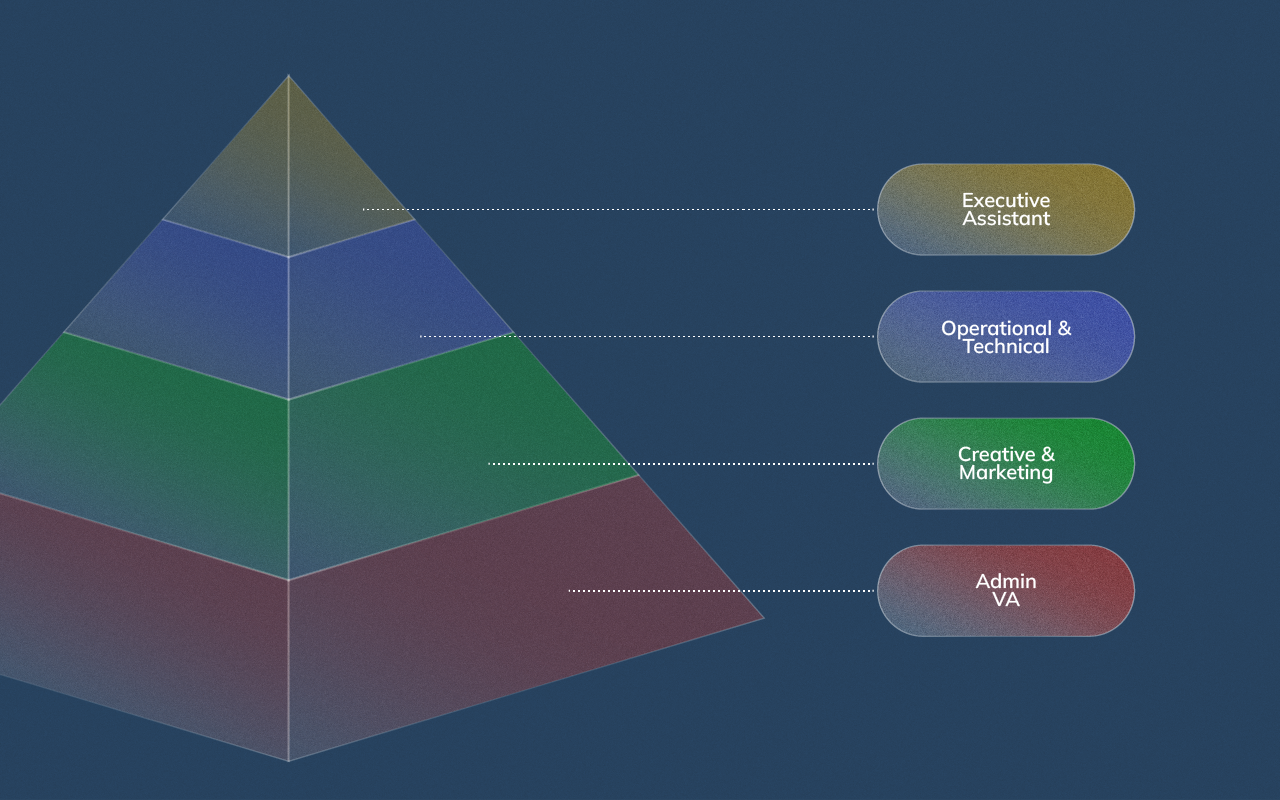
Different VA roles command different salary ranges depending on complexity, specialization, and regional labor markets. Below is a straightforward breakdown of typical costs across key categories, helping you understand where each role sits on the pricing spectrum.
Administrative Virtual Assistants
$4–$15/hr depending on region
Common tasks: inbox management, scheduling, calendar coordination, documentation, data entry, research
These are the most affordable roles because they rely on general administrative skills and process consistency rather than niche expertise.
Creative & Marketing Virtual Assistants
$8–$30/hr
Common tasks: social media management, content editing, copywriting, basic design, newsletter creation
Rates increase here due to the need for creativity, brand alignment, and platform-specific knowledge—especially for social and content-heavy businesses.
Operational & Technical Virtual Assistants
$10–$40/hr
Common tasks: bookkeeping, CRM administration, automation setup, reporting, project coordination, SOP development
These roles command higher rates because they require technical competency, workflow design experience, and familiarity with specialized software tools.
Executive Assistants
$800–$6,500/month globally
Common support areas: founder enablement, executive communication, team coordination, strategic prioritization
Executive assistants sit at the top of the VA salary range due to the experience, judgment, and discretion required. They often deliver the strongest ROI because they directly expand leadership capacity.
Factors Affecting Virtual Assistant Pricing
Virtual assistant pricing varies widely because several operational and market-driven variables influence the final rate. Understanding these factors helps you budget accurately and choose the right level of support for your team.
Skill Level (Admin vs. Marketing vs. Specialized Ops)
General admin support is typically the most affordable, while specialized roles—such as bookkeeping, CRM management, marketing operations, or automation—command higher rates due to deeper technical skills.
Experience and Training
VAs with years of experience, formal training programs, or industry certifications often cost more but require less onboarding and deliver faster productivity.
Country of Hiring
Location has one of the largest impacts on price. Countries like the Philippines, India, and Sri Lanka offer lower labor costs, while the United States and UK charge premium rates due to higher living expenses and labor regulations.
Read more: Step-by-step guide on how to hire a virtual assistant in China for region-specific support.
Industry Complexity
Tasks in real estate, finance, legal, healthcare, or SaaS operations often require specialized knowledge, increasing the assistant’s value and cost.
Read more: See how specialized virtual assistants for law firms handle legal workflows securely.
Time Zone Alignment
If you require real-time collaboration or specific shift windows, such as U.S. business hours, expect higher pricing—especially from offshore providers who adjust their schedules.
Tools and Systems Required
Assistants proficient in advanced tools (HubSpot, Salesforce, Notion, Figma, QuickBooks, automation platforms) often charge more, as tool mastery shortens ramp time and reduces errors.
Expected Availability (Part-Time vs. Full-Time)
Full-time assistants offer lower effective hourly rates, while part-time roles or flexible hour bundles typically cost more per hour due to reduced commitment.
Read more: Compare virtual assistants in the Philippines vs Latin America to optimize your offshore budget.
Is a Virtual Assistant Worth It? Measuring ROI
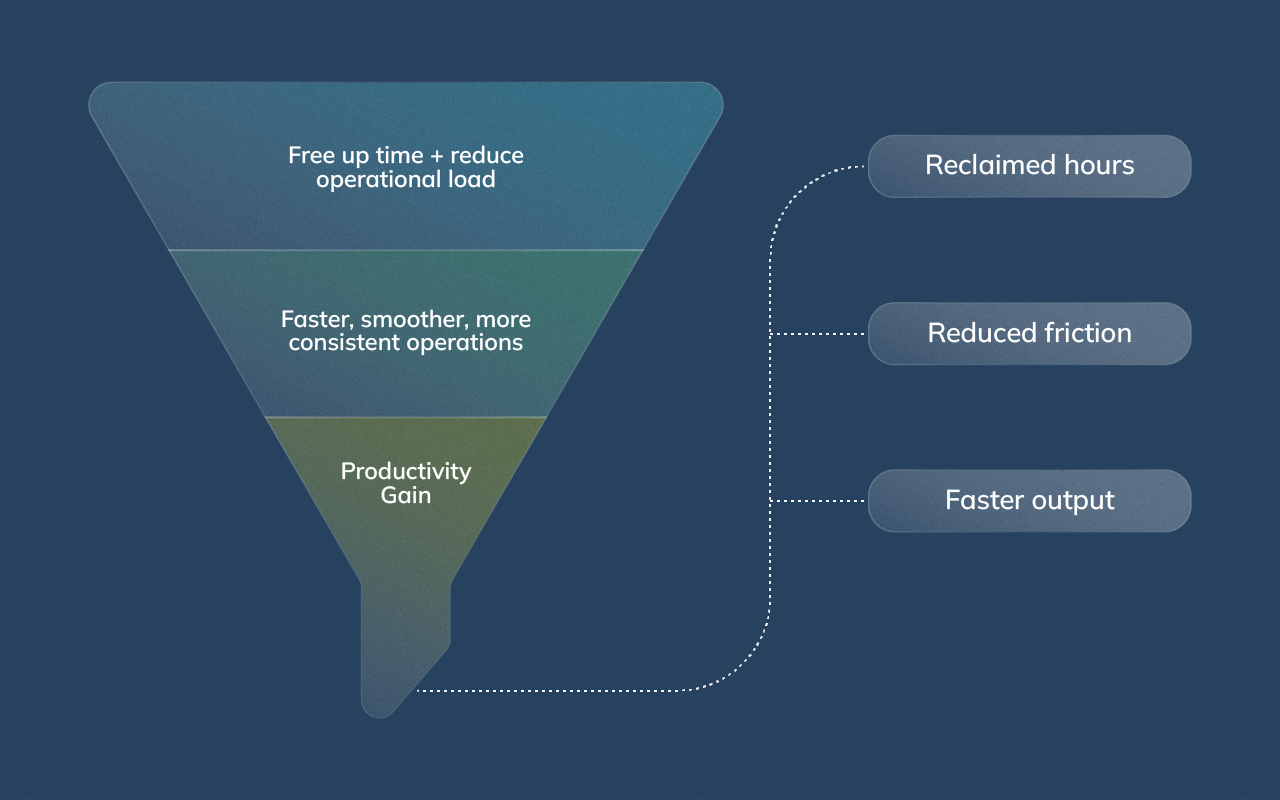
A virtual assistant becomes a high-ROI investment when they free up meaningful time, stabilize operations, and take ownership of tasks that drain your team’s momentum. The value isn’t just in lower labor cost—it’s in the compounding impact on focus, speed, and decision-making.
Signs Your VA Investment Is Paying Off
- You reclaim 10–20+ hours per week that were previously spent on coordination, admin, or communication tasks.
- Output becomes more predictable, with tasks completed faster and with fewer errors or bottlenecks.
- Your team shifts toward revenue-driving activity, because non-core work is consistently delegated.
- Workflows become smoother, especially when your VA takes over scheduling, follow-ups, reporting, or process documentation.
- You experience less operational friction, allowing you to scale without adding management overhead.
Read more: Learn how to hire a reliable virtual assistant and avoid the most common failure points.
Hire Overseas Insider: How to Budget for a Virtual Assistant
Budgeting for a VA becomes far more accurate—and cost-effective—when you approach it like an operational planning exercise instead of a guess. A structured approach ensures you allocate hours correctly, choose the right talent market, and avoid overpaying for skills you don’t need.
1. List your recurring weekly tasks
Include admin, communication, follow-ups, coordination, customer support, reporting, and anything currently slowing operations.
2. Estimate the true time required
Most leaders underestimate workload. Doubling early estimates often provides a more realistic baseline for a VA’s weekly capacity.
3. Match workload to the right hiring model
- Light or inconsistent work → Part-time or freelance
- Daily operations → Full-time offshore assistant
- High-sensitivity support → Domestic or premium EA
4. Choose the region and skill level strategically
Costs vary dramatically by country and specialization. Offshore markets are ideal for operational tasks, while domestic talent is best for sensitive or executive-level work.
5. Add a 10–20% delegation buffer
Once a VA integrates into your workflow, delegation grows naturally. Budgeting for expansion avoids strain later.
If your workload is steady, consider transitioning to a full-time offshore VA. They typically take on 70–80% of daily operational tasks and deliver more consistent output at a much lower effective hourly rate.
Reclaim Focus. Elevate Performance. Scale Sustainably.
Clarity returns when the bottlenecks disappear. The right virtual assistant gives you the space to think bigger, execute faster, and scale without burning out or stretching your internal team. When you match the right talent to the right model, your operations strengthen, your workload becomes lighter, and growth becomes far more manageable.
If you’re ready to build a virtual staffing setup that truly supports the way your business runs, expert guidance from Hire Overseas can help you find the most cost-efficient path forward.
Start with a personalized consultation and see what the right virtual team can unlock—book a demo here today.
FAQs About Virtual Assistant Cost
Are virtual assistant costs tax-deductible for businesses?
Yes. In most countries, hiring a virtual assistant—whether freelance or agency—is treated as a business operating expense and is tax-deductible. Always confirm with your accountant for region-specific rules.
Do virtual assistants charge more for working U.S. or UK business hours?
Often yes. Offshore VAs typically add a small premium for night-shift or Western-aligned hours because it impacts scheduling and labor availability in their region.
What hidden costs should I watch out for when hiring a VA?
Hidden expenses can include training time, software subscriptions, additional communication tools, extra revision cycles, or replacement time if a freelancer disappears. Agencies typically absorb these costs, while direct hires do not.
Is it cheaper to hire one multi-skilled VA or multiple specialists?
One VA is cheaper, but multiple specialists often deliver better output. Multi-skilled VAs save money on simple tasks, but specialized roles (e.g., bookkeeping, automation, SEO) justify higher ROI when done by experts.
Do virtual assistants raise their rates after the first year?
Some do, especially freelancers whose demand grows over time. Agencies tend to maintain stable prices unless you upgrade your role to a higher-level function.
How do virtual assistant productivity tools affect overall cost?
Tools like automation platforms, task trackers, or shared inbox systems can reduce the number of hours you need each month. Agencies with built-in software often deliver better cost efficiency because fewer manual hours are required.
