



Attracting and retaining talent is no longer a linear process that starts with a job post and ends with an offer. It is an operating system that determines how fast a company can move, how much leadership attention is consumed by people management, and whether growth compounds or constantly resets.
From what we see at Hire Overseas, companies that struggle with hiring rarely lack candidates. They lack clarity. This guide breaks down what actually works when attracting and retaining talent in today’s highly competitive and global hiring environment.
Why Attracting and Retaining Talent Is Now a Core Business System
Attracting and retaining talent is no longer an HR responsibility that sits on the side of the business. It is a core operating system that directly shapes how fast teams move, how well decisions are executed, and how much time leaders spend managing work versus redoing it. Companies that treat talent as a system build momentum. Those that do not slowly lose it.
The importance of attracting and retaining talent has fundamentally changed
In the past, hiring was treated as a support function. Today, talent decisions directly affect execution speed, product quality, and leadership focus. When the wrong people are hired or strong performers disengage, managers are forced back into daily oversight. That friction compounds quickly.
This is why the importance of attracting and retaining talent now sits alongside product and revenue strategy. Companies that get this wrong do not fail loudly. They slow down quietly.
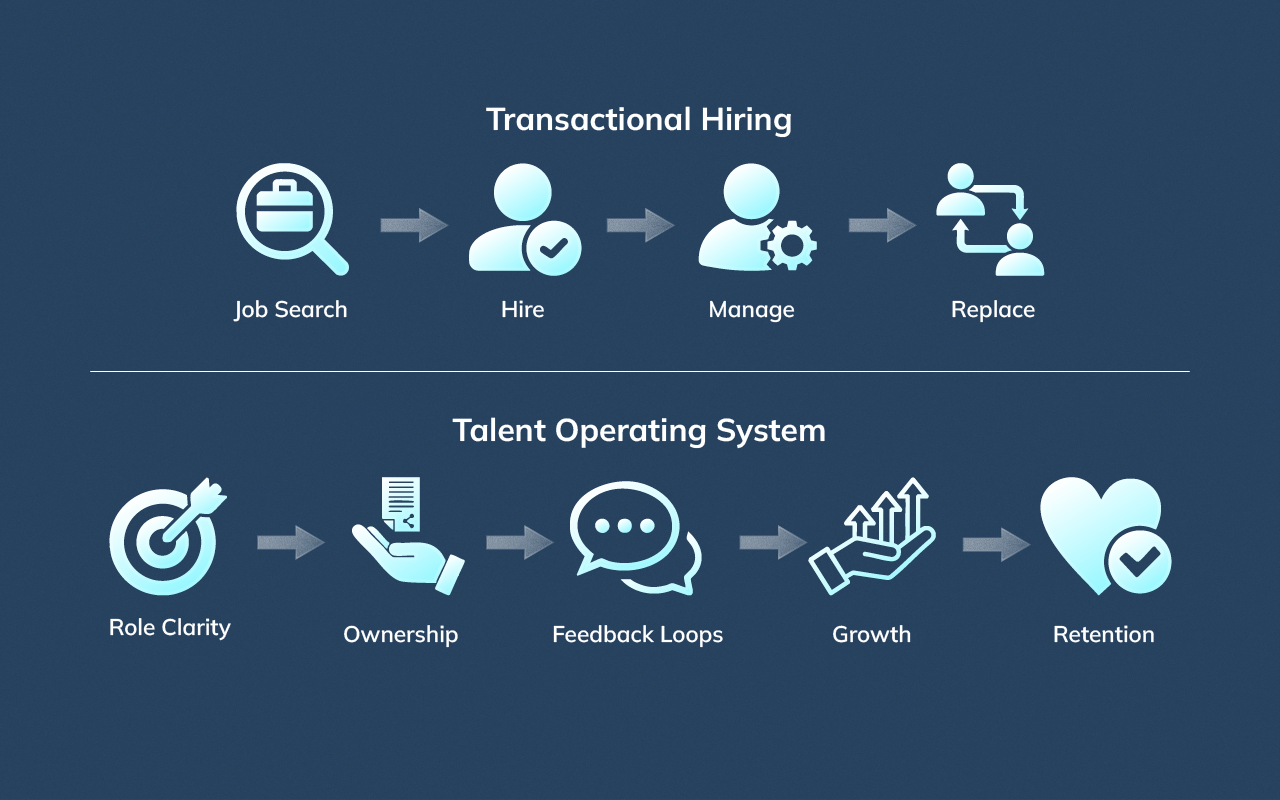
Workforce talent management replaces transactional hiring
Modern workforce talent management is not about filling roles as they open. It is about designing roles that stay relevant as the company evolves. This includes how responsibilities change, how success is measured, and how people grow with the business.
When companies rely on reactive hiring, they create constant misalignment. When they design a system, retention improves without additional incentives.
Retention begins before the first interview
Candidates evaluate more than compensation. They observe how clearly the company operates, how decisions are explained, and whether expectations are consistent. These early signals determine whether someone joins with confidence or hesitation.
Attracting and retaining the right talent starts long before onboarding. It starts with how the company shows up during the hiring process itself.
For global hiring teams, this framework for assessing the English skills of offshore talent shows how to evaluate real working communication—not just interview fluency—before expectations are set.
How to Attract the Right Talent in a Competitive Job Market
Attracting the right talent is not about being louder in the market or offering more perks than competitors. It is about removing friction, increasing clarity, and signaling competence at every stage of the hiring process. The companies that consistently attract top talent follow a small set of disciplined steps that make it easier for strong candidates to recognize fit and opt in with confidence.
1. Start with role clarity (before you source anyone)
If you want to get better at attracting top talent, your first lever is not sourcing. It is role definition.
High performers avoid vague roles because vague roles usually mean:
- unclear ownership
- shifting priorities
- success that is hard to measure
To attract the best candidates, define these upfront:
- Outcomes: what “good” looks like in 30, 60, and 90 days
- Decision rights: what they own vs what they support
- Success metrics: how performance will be evaluated early
When candidates can picture themselves winning in the role, you are already doing a better job at attracting the right talent.
2. Filter intentionally (volume is not the goal)
Many companies assume more applicants means better hiring. In reality, it creates noise and slows decision-making, which is the opposite of what top candidates want.
To improve approaches to attracting talent, tighten the role so it filters for fit:
- be specific about the work type (execution vs strategy, independent vs collaborative)
- clarify required context (industry exposure, tools, workflows)
- state what the role is not responsible for
This attracts fewer but higher-quality applicants and reduces post-hire confusion because you are recruiting for reality, not a vague title.
3. Make your hiring process prove your credibility
A big part of employer branding and talent attraction is whether your process feels decisive and well-run.
Top candidates interpret these as red flags:
- slow follow-ups
- inconsistent interviews
- unclear feedback or vague next steps
If you want stronger candidates without increasing spend, improve execution:
- respond quickly
- keep interviews structured
- explain timelines and stick to them
- give clear, direct next-step communication
Companies that run a clean hiring process look more mature, and that alone improves attracting talent to your organization.
If you’re applying this clarity-first hiring approach to revenue roles, this guide on scaling marketing teams with remote talent shows how companies add capacity quickly without creating coordination drag.
4. For tech and developer talent, sell ownership and autonomy
When it comes to attracting tech talent and attracting developer talent, perks do not close strong engineers. Clarity does.
What engineers want to know immediately:
- what they truly own
- how technical decisions are made
- whether feedback loops are fast and useful
- whether tooling and standards are modern enough to do good work
One of the fastest ways to lose strong candidates is stretching interviews too long or changing expectations mid-process. Tight scope and fast decisions consistently improve conversion.
5. Expand beyond one geography (especially during a labor shortage)
If you are attracting talent during a labor shortage, staying local often means competing in the most expensive, most saturated part of the market.
A practical shift is building global access into your hiring model:
- widen sourcing to new regions
- adjust working norms for async collaboration
- standardize onboarding and communication expectations
This is how companies improve attracting global talent without sacrificing quality, while also reducing risk tied to one local market.
For teams expanding globally to stay competitive, this breakdown of hiring AI talent in the Philippines explains what roles are available, how senior the talent pool actually is, and where companies see the fastest ramp-up.
6. Build fairness into the system to attract diverse talent that stays
If you want attracting diverse talent to be real and repeatable, it cannot depend on good intentions. It must be built into your process.
Operational fairness means:
- structured interviews with consistent criteria
- clear expectations and evaluation standards
- transparent growth and promotion signals
This is where DEI (Diversity, Equity, and Inclusion) and talent attraction becomes practical. People are far more likely to join and stay when they understand how decisions are made and how they can progress. That is how you support attracting and retaining diverse talent long-term.
How to Retain Talent After You Attract Them
Attracting talent sets expectations. Retention is the test of whether those expectations were real. The companies that keep strong people long-term are not doing something different after hiring. They are doing the same things, consistently, once work begins.
Retention works best when it feels like a continuation of attraction, not a correction.
1. Manage consistently because culture is built daily
Culture is not what is written down. It is what managers do every day. How work is prioritized, how mistakes are handled, and how feedback is delivered determines whether people stay engaged or slowly disengage.
Consistency is what keeps teams stable. When expectations shift without explanation or feedback is uneven, trust erodes. Strong candidates join because they sense clarity and direction. They stay when that clarity continues.
2. Deliver the employee value proposition you hired with
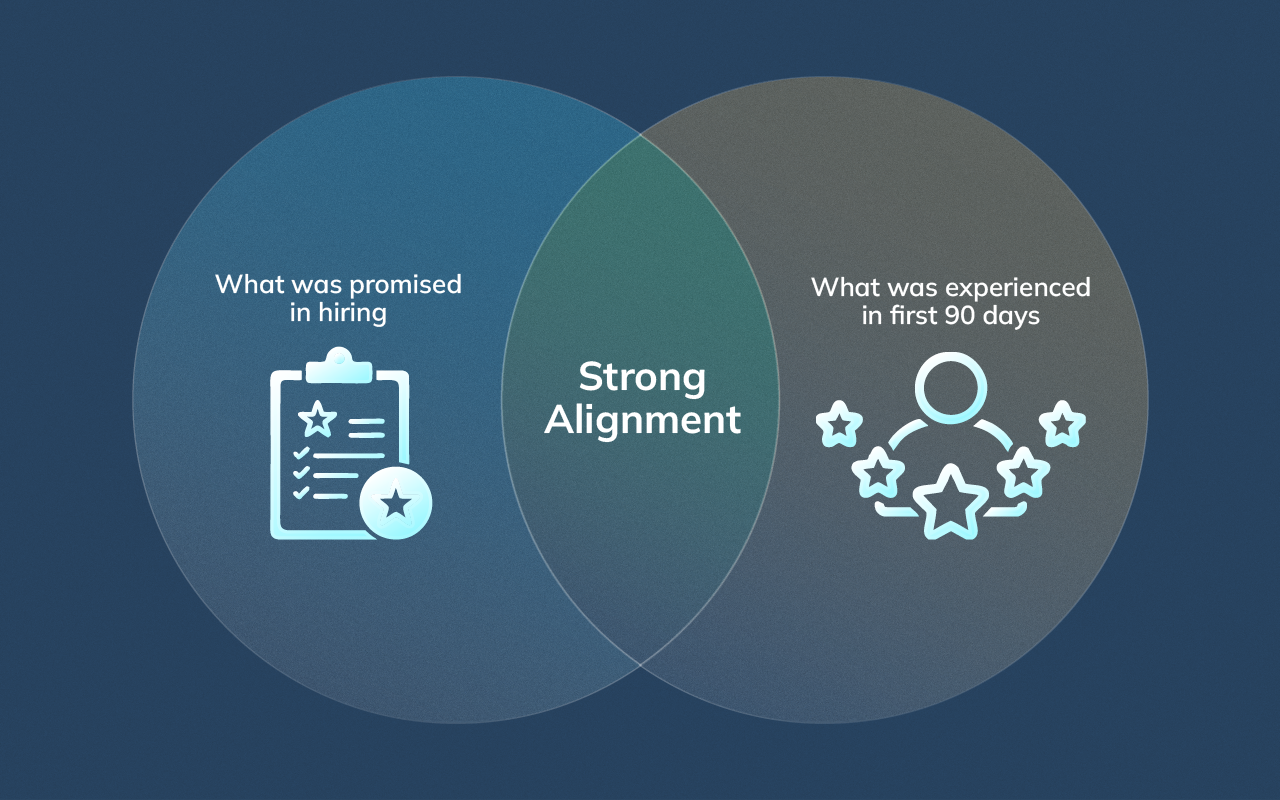
An employee value proposition attracts candidates, but it only retains them if it holds up in practice. Growth, learning, and autonomy must show up early and repeatedly, not as future promises.
When the EVP matches lived experience, trust compounds. When it does not, disengagement starts quietly, even if performance looks fine on the surface. Retention improves when companies treat EVP as an operating standard, not a recruiting asset.
3. Create visible progress through growth and development
People leave when progress stalls. Titles and compensation matter, but momentum matters more. Companies that invest in growing and developing talent keep people engaged by expanding scope, increasing ownership, and clarifying progression.
Development signals long-term intent. It tells employees they are building toward something. That same signal is what attracted them in the first place.
4. Reduce retention risk by aligning promises with reality
Most retention issues are not sudden failures. They are slow mismatches between expectation and experience. When hiring signals are reinforced through daily execution, retention becomes predictable instead of fragile.
Retention is not a separate system. It is attraction sustained over time through consistency, credibility, and follow-through.
Retention is attraction sustained over time
When retention strategies align with how talent was attracted, teams stay engaged longer and turnover becomes predictable instead of disruptive. The gap between expectation and experience shrinks.
Attracting and retaining talent succeeds when companies deliver the same clarity, structure, and credibility after hiring that they showed during the hiring process itself.
Attracting talent is only half the equation—how you structure and manage your team is what ultimately determines whether they stay and perform:
Hire Overseas Insider: How We Design Attraction and Retention as One System
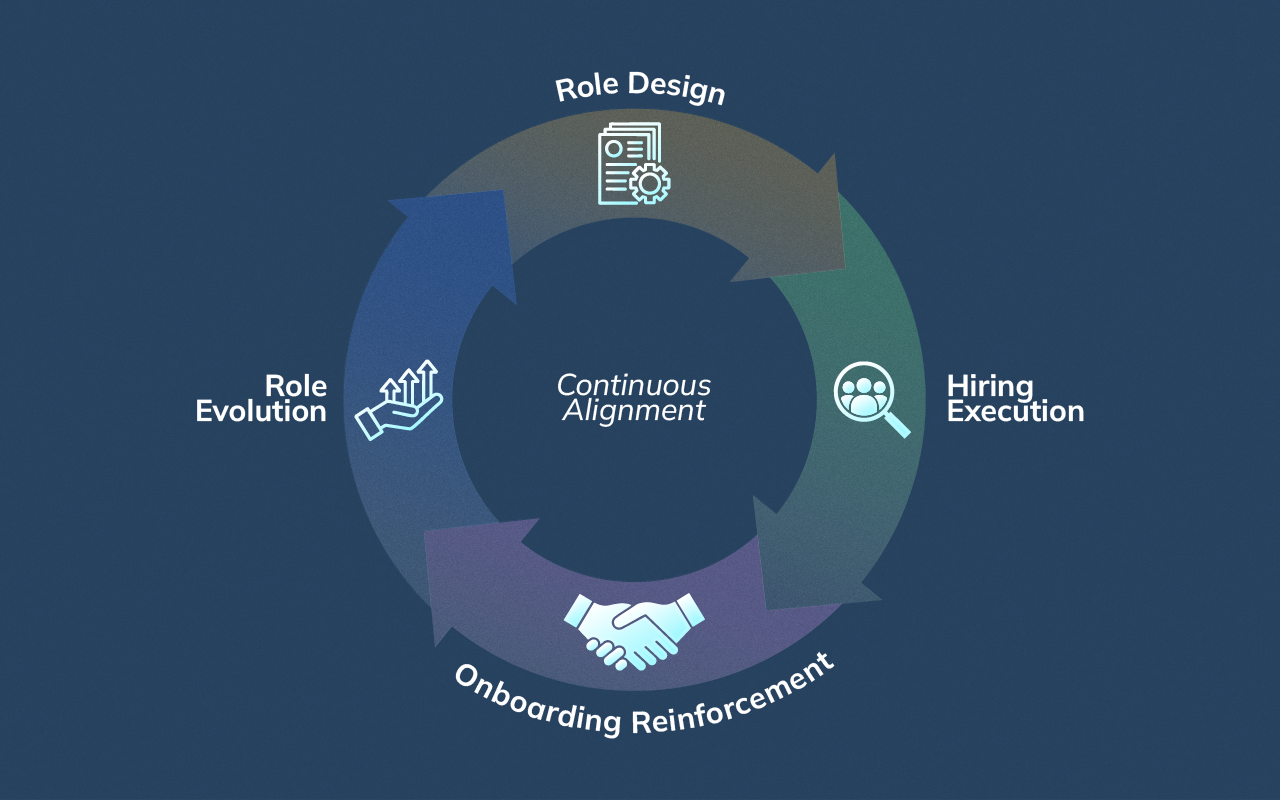
At Hire Overseas, we do not treat attracting and retaining talent as separate problems to solve later. We design them together from the beginning, because in practice they are both outcomes of the same thing: how a role is defined, supported, and allowed to evolve over time.
Our experience working with global teams shows that when attraction and retention are designed in isolation, misalignment is inevitable. When they are designed as one system, performance compounds.
We design roles to attract the right people and keep them engaged
Our first step is never sourcing. It is role design.
We work with clients to define:
- clear ownership and decision rights
- success metrics for the first 30, 60, and 90 days
- how the role is expected to grow as the business scales
This clarity attracts stronger candidates and reduces early frustration. People join with confidence because expectations are explicit, and they stay because those expectations remain stable.
We build hiring processes that signal long-term credibility
Hiring is the first real experience candidates have with how a company operates. We treat it that way.
At Hire Overseas, we help teams:
- move quickly without cutting corners
- keep interviews structured and consistent
- communicate timelines and decisions clearly
This improves employer credibility during attraction and builds trust that carries into onboarding. Strong candidates respond to decisiveness, and that same decisiveness supports retention later.
3. We structure onboarding to reinforce what hiring promised
Onboarding is where most retention risk quietly starts. That is why we focus heavily on the first 30 to 90 days.
We ensure new hires:
- gain real ownership early
- understand how feedback works
- see how their work connects to outcomes
When onboarding reinforces the signals candidates responded to during hiring, engagement stays high and momentum builds instead of stalling.
4. We support role evolution instead of waiting for churn signals
Roles should not stay static while businesses change. We help companies revisit role fit regularly, adjust scope as skills compound, and communicate changes early.
This prevents the stagnation that causes strong performers to disengage. It also allows companies to keep attracting new talent without creating downstream churn.
5. We treat attraction and retention as a continuous operating loop
The companies that succeed long-term do not “fix retention.” They prevent misalignment.
By aligning role design, hiring execution, onboarding, and growth expectations, attracting and retaining talent becomes a stable system rather than a recurring crisis.
That is how we help companies at Hire Overseas build teams that perform consistently, grow together, and stay aligned as the business scales.
Treat Talent as a System, Not a Series of Hires
Attracting and retaining talent is no longer about winning individual hires. It is about building an operating system that consistently brings the right people in, supports them once they arrive, and allows them to grow as the business evolves.
The companies that struggle are rarely short on applicants. They are short on clarity, consistency, and follow-through. The ones that succeed design attraction and retention together by defining roles properly, hiring decisively, onboarding intentionally, and revisiting role fit as conditions change.
When talent is treated as a system:
- hiring becomes faster and more selective
- retention becomes predictable instead of reactive
- leaders spend less time fixing people problems and more time building the business
At Hire Overseas, this is exactly how we help companies scale. We do not optimize for short-term placements. We design roles, hiring processes, and team structures that attract strong performers and keep them engaged long after the offer is signed.
If you are ready to move beyond reactive hiring and build a team that compounds over time, the next step is a conversation.
Book a demo with Hire Overseas and learn how we help companies design, hire, and retain global talent with clarity and confidence.
