



Hiring is not your biggest problem. Hiring the wrong remote developer is. One bad hire creates missed deadlines, rewrite cycles, security risk, and weeks of management drag.
This guide shows how to hire remote developers using a repeatable system founders can run in days, not months. It also helps you decide when to hire dedicated remote developers, when to use freelance remote developers, and how to build a remote software development team that ships reliably.
Why most teams fail when they hire remote developers
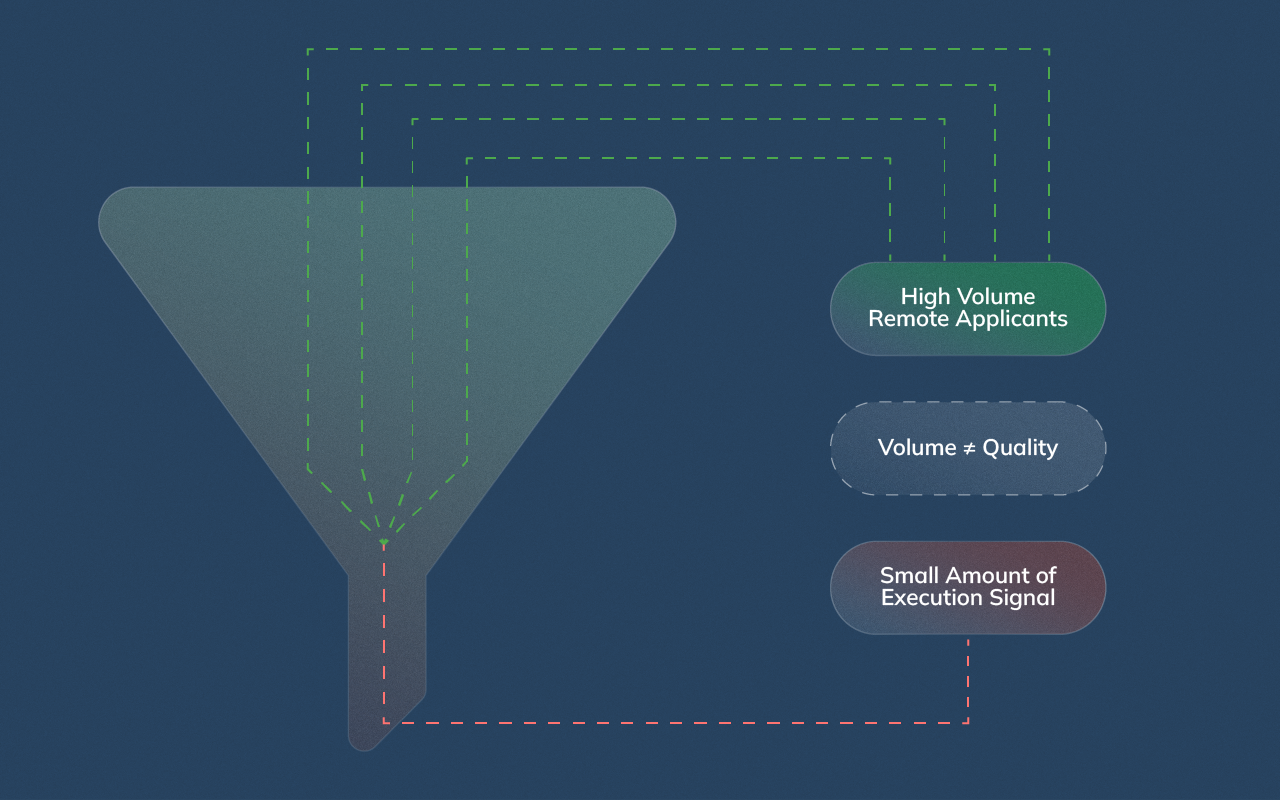
Most teams do not fail because remote hiring is difficult. They fail because they use a local hiring mindset in a global, high-noise market.
Here’s what actually breaks down in 2025.
1. Application volume explodes, signal collapses
Remote roles attract massive applicant volume, but volume does not equal quality.
What changes in practice:
- Hundreds of applicants meet surface-level requirements.
- Many resumes are templated or AI-generated.
- Strong developers who do not optimize for ATS keywords are filtered out early.
What this causes for founders: You spend weeks interviewing candidates who look qualified but cannot execute once hired. Meanwhile, real builders never make it past the first filter.
2. Polished presentation hides execution gaps
AI tools now allow weak candidates to present like seniors:
- clean portfolios
- confident technical explanations
- well-rehearsed interview answers
This removes the visual and communication signals founders used to rely on to spot inexperience.
What this causes for founders: You hire someone who interviews well, then discover they need constant clarification, miss edge cases, and slow the team once real work starts.
3. Remote hiring increases hidden risk
Remote hiring introduces risks that are rare in local hiring:
- the interviewee is not the person doing the work
- credentials are exaggerated or borrowed
- work is silently subcontracted
- accountability is unclear when problems surface
What this causes for founders: You lose 2–4 weeks before realizing delivery is off-track, then face the cost of replacement, re-onboarding, and delayed roadmap commitments.
4. Skills are easier to find than execution
Most founders hire for tools and languages first. But remote success depends more on how someone works than what they know.
Critical remote execution traits include:
- ownership without supervision
- clear written communication
- fast escalation of blockers
- ability to work asynchronously
- good judgment under ambiguity
A technically capable developer without these traits becomes a drag instead of leverage.
What this causes for founders: You become the project manager, QA lead, and unblocker for the person you hired to reduce your workload.
5. Traditional hiring tests reward the wrong behavior
Many hiring processes measure theoretical ability, not real delivery:
- algorithm puzzles do not reflect product work
- long take-home tests repel strong candidates
- generic demo projects ignore real-world constraints
These methods fail to test how developers operate inside a live codebase.
What this causes for founders: You hire someone who passed your test but cannot ship confidently inside your product, forcing rewrites and constant review.
Why guessing fails and systems win
The common thread across these failures is not talent scarcity. It is the lack of structure.
When founders rely on resumes, interviews, and hope, outcomes depend on luck. When they define outcomes first and evaluate candidates against real execution criteria, hiring becomes predictable.
This is why teams that succeed do not “find developers and hope.”
They use a scorecard-first system that filters for delivery, not just credentials.
Read more: How specialized remote developers are vetted for real product work.
Step 1: Define the outcome before you recruit developers
If you want to understand how to hire remote software developers, start with one question:
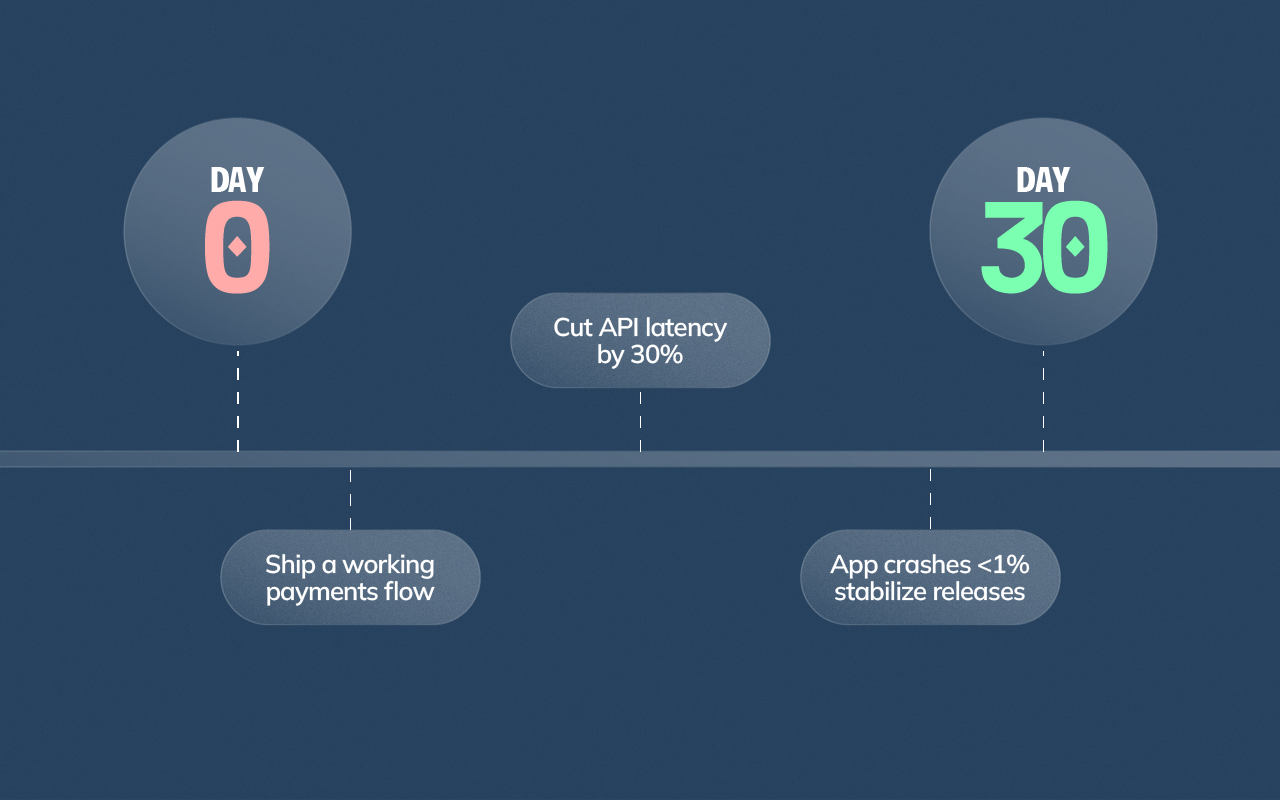
What must be true in 30 days for this hire to be a clear win?
Do not write a job description yet. Write a 30-day outcome.
Strong outcome examples:
- Ship a payments MVP with Stripe, webhooks, retries, and a basic admin UI.
- Reduce API latency by 30% using caching and measurable performance metrics.
- Stabilize mobile app crash rate under 1% and improve the release pipeline.
This step forces clarity. It determines:
- whether you need junior, mid-level, or senior talent
- which tech stack experience actually matters
- how much budget is justified
- whether to hire a remote engineer or build a hire remote development team around a tech lead
Without this, hiring decisions are based on assumptions instead of outcomes.
Step 2: Pick the right hiring model (freelance vs dedicated vs team)
Different goals require different hiring structures. Choosing the wrong model creates friction no matter how strong the developer is.
When to use freelance remote developers
- Use freelance remote developers when:
- the scope is narrow and clearly defined (one integration, UI polish, bug fixes)
- you can review output daily
- you can replace quickly if execution falls short
Freelancers are flexible, but they are not built for ownership or long-term continuity.
When to hire dedicated remote developers
Hire dedicated remote developers when:
- you need consistent weekly delivery
- the developer must understand your codebase deeply
- features will evolve over multiple months
This model works best for core product development where context matters.
When to hire a remote software development team
- Hire a remote software development team when:
- you need multiple roles at once (backend, frontend, QA, DevOps)
- you want delivery support like sprint planning and QA processes
- your roadmap exceeds what one engineer can realistically handle
If speed and reliability matter more than micromanagement, it is often better to hire a dedicated remote development team instead of stacking freelancers.
Step 3: Write a remote-ready scorecard (this replaces vague job posts)
A strong scorecard is how you recruit developers with precision instead of guesswork.
Your scorecard should include:
- Must-have outcomes from Step 1
- Hard requirements such as stack, experience level, or domain constraints
- Remote execution traits like clear written updates, good questions, and small, shippable PRs
- Red flags to watch for in a candidate include not writing tests, being vague about past responsibilities, or struggling to explain technical decisions.
This scorecard becomes your filter for sourcing, interviews, and trials. It prevents the common mistake of hiring someone who interviews well but delivers poorly.
Step 4: Where to find remote developers (and what each source is best for)
If you are looking for the best place to hire developers, the real answer is that each option carries a different level of risk.
Here’s how founders find remote developers efficiently:
Marketplaces (fast volume, mixed quality)
Good for: short tasks or proofs of concept
Risk: heavy screening effort and inconsistent delivery
Marketplaces can be the best site to hire programmers for quick gigs, but only when scope is tight and replacement is easy.
Direct sourcing (LinkedIn, communities, referrals)
Good for: senior hires, long-term roles, culture alignment
Risk: slow and requires strong interviewing skills
This works best when founders know exactly what “good” looks like.
Recruiters or vetted networks (highest signal)
Good for: speed, quality, and lower failure rates
Risk: higher upfront cost
This is the safest option when you need to hire remote software engineers who can contribute immediately.
Step 5: Vet for real work, not resume claims
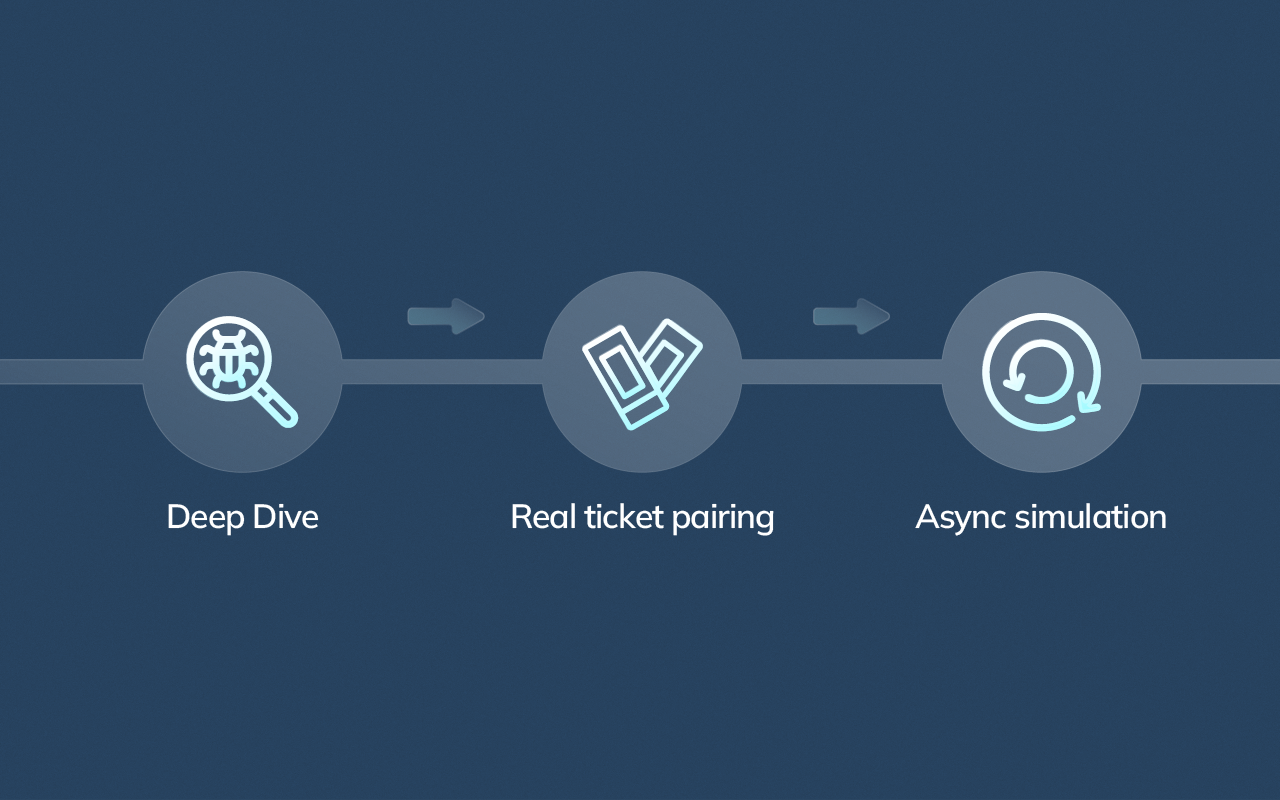
Many guides recommend long take-home tests. These often repel strong candidates and waste time. A better approach is a 90-minute practical evaluation.
a. 15-minute deep-dive
Ask them to explain:
- the last system they owned
- one difficult tradeoff they made
- how they debug production issues
You are testing clarity and ownership, not trivia.
b. 45-minute paired “real ticket”
Use simplified real work:
- add a small endpoint
- write tests
- handle edge cases
- outline a clean PR plan
This shows how they think inside a real codebase.
c. 30-minute async simulation
Give a short prompt and evaluate:
- clarity of the written plan
- quality of questions
- quality of status updates
This step reveals whether they can operate without constant supervision, which is critical when you hire remote programmers.
Step 6: Role-specific checks (web, app, backend, full-stack)
Different roles fail in different ways, so your evaluation should reflect the job.
If you need to hire remote web developers
Focus on:
- UI correctness and performance
- component structure
- accessibility basics
- clean state management
- collaboration with product and design
Strong remote web developers should be able to explain how their frontend decisions affect usability, performance, and long-term maintainability.
If you need to hire remote app developers
Focus on:
- release discipline and CI
- crash handling and performance
- offline behavior and device variance
- production stability, not just features
Effective remote app developers think beyond features and prioritize stability, release quality, and real-world usage conditions.
If you need to hire remote software engineers for backend
Focus on:
- API design and consistency
- observability (logs, metrics, tracing)
- data modeling and migrations
- security and access control basics
High-impact remote software engineers design backend systems that are observable, secure, and resilient under real production load.
If you need to hire remote full-stack developers
Focus on:
- ability to work across frontend and backend without hand-offs
- clean API and UI integration
- sensible architectural tradeoffs between speed and maintainability
- clear understanding of where to simplify and where to be precise
- strong communication across product, design, and engineering
Effective remote full-stack developers balance breadth and judgment. They know when to move fast, when to slow down, and how to ship end-to-end features without creating long-term technical debt.
Step 7: Close the offer with execution clarity, not just money
Remote developers choose teams that feel structured and predictable.
Your offer should clearly state:
- the first 30-day outcomes
- communication cadence and expectations
- working overlap hours
- definition of done (tests, reviews, deployments)
This reduces early churn and makes it easier to hire a team of remote developers that stays stable.
Step 8: Onboard like a product launch
Onboarding determines whether a hire becomes leverage or friction.
A simple, effective onboarding flow:
- Day 1: repo access, local setup, first small PR
- Day 2–3: ship a tiny improvement to production
- Week 1: own a small feature end-to-end
- Week 2: propose improvements, not just execute tickets
If you plan to hire remote developer team members over time, document this process. Each new hire will ramp faster and require less founder attention.
Common mistakes founders make when hiring remote developers
Most remote hiring failures are self-inflicted. Founders move fast, skip structure, and end up paying for mistakes that could have been avoided.
Hiring one “senior” to do everything without clear outcomes
Founders often hire a single senior developer hoping they will handle architecture, delivery, reviews, DevOps, and product decisions at once. Without defined 30-day outcomes, that “senior” role becomes vague.
What happens in practice: Work moves, but nothing finishes. Architecture decisions stall, features half-ship, and the founder becomes the tie-breaker for every technical question. Even strong seniors underperform when the scope is undefined.
Using long take-home tests that repel strong candidates
Lengthy unpaid assignments often favor those who simply have more time. Experienced remote developers often opt out rather than spend weekends on speculative work.
What happens in practice: You filter out the best candidates and end up evaluating people who are comfortable doing unpaid labor but may not perform well in production.
Confusing “busy” with “shipping”
Many founders hire for activity instead of output. Developers look productive, but features do not ship. This mismatch only becomes visible after weeks of stalled progress.
What happens in practice: Founders hire developers who stay busy but struggle to close work. Features sit “in progress,” pull requests drag on, and releases slip. Without hiring for developers who are measured on shipped PRs and clear definitions of “done,” progress becomes hard to track and momentum fades.
Treating communication as optional
Some founders assume strong engineers will “just figure it out.” They do not define expectations for updates, escalation, or documentation.
What happens in practice: Small blockers turn into multi-day delays. Misunderstandings compound. Founders spend more time clarifying context than reviewing actual output.
Overusing freelancers instead of building stability
Stacking freelancers feels flexible and cheaper early on, but it creates fragmented ownership and inconsistent quality. Each person optimizes for their task, not the product.
What happens in practice: Context is lost between handoffs. Bugs reappear. Onboarding time repeats endlessly. Velocity drops as soon as the roadmap becomes more complex.
In most cases, a hire dedicated software development team model delivers better long-term speed because ownership, context, and accountability are stable.
One more mistake founders make: Hiring for cost instead of risk
Many founders focus on hourly rates and overlook the real cost of failure.
What happens in practice: A low-cost hire who requires constant correction, rework, or replacement ends up draining far more value through missed deadlines, delayed launches, and founder distraction.
This is why companies work with partners like Hire Overseas. Instead of optimizing for the cheapest developer, Hire Overseas screens for execution reliability, communication quality, and real ownership. The result is senior, product-ready talent that reduces delivery risk and protects your roadmap from costly mis-hires.
The goal is not to hire cheaply. It is to hire in a way that protects momentum.
Read more: How remote staffing models affect long-term delivery cost.
The pattern behind every mistake
Each mistake comes from the same root issue: lack of structure.
When founders define outcomes, execution standards, communication rules, and ownership clearly, remote teams outperform local ones. When they don’t, even great developers struggle.
Why Structure Determines Your Remote Developer Hiring Success
Most remote hiring failures come down to one issue: lack of structure.
When outcomes, execution standards, and communication expectations are unclear, even strong developers struggle. When those elements are defined upfront, remote teams ship faster and require less oversight.
Hire Overseas gives founders that structure. From role scoping to vetting and onboarding, the process is designed to reduce hiring risk and focus on delivery, not guesswork. That structure is what allows founders to hire with confidence and build remote teams that ship consistently.
If you want to stop gambling on remote hires and follow a proven way to build a team that executes, communicates clearly, and scales with your roadmap, book a demo with Hire Overseas.
FAQs About Hiring Remote Developers
What is the biggest red flag when interviewing remote developers?
The strongest red flag is vagueness about ownership. Candidates who cannot clearly explain what they personally built, decided, or were accountable for in past roles often struggle with execution once hired—especially in remote environments.
Is it better to hire remote developers through agencies or independently?
It depends on your risk tolerance.
Hiring independently can work if you have time and strong technical screening skills, but it carries higher risk if a hire underperforms.
Agencies reduce that risk by pre-vetting talent. Hire Overseas goes further by delivering day-one, impact-ready developers who are screened for execution, communication, and ownership—not just resumes. For founders who need speed and reliability, the higher upfront cost often pays for itself by avoiding mis-hires and delays.
How should founders measure performance for remote developers?
Performance should be measured on shipped outcomes, not hours worked. Clear definitions of “done,” small pull requests, production releases, and progress against 30-day outcomes are far more reliable indicators than activity or availability.
Can early-stage startups successfully hire senior remote developers?
Yes, but only when the role has clear scope and authority. Senior developers underperform when expectations are vague. Startups that define decision rights, ownership areas, and success metrics tend to get far more leverage from senior remote hires.
What is the minimum onboarding needed for a remote developer to be effective?
At minimum: documented setup instructions, access to repositories and tools, a small first production task in week one, and a clear communication cadence. Without this, even strong developers lose momentum early.
How do I avoid constant micromanagement with remote developers?
Micromanagement usually signals unclear outcomes. When developers know exactly what success looks like, how to communicate progress, and when to escalate blockers, founders can step back and focus on strategy instead of daily supervision.
When should a founder consider replacing a remote developer?
If progress consistently stalls, blockers are not escalated, and shipped output does not align with agreed outcomes after clear feedback, replacement is usually the right call. Delaying this decision often compounds cost and roadmap risk.
