


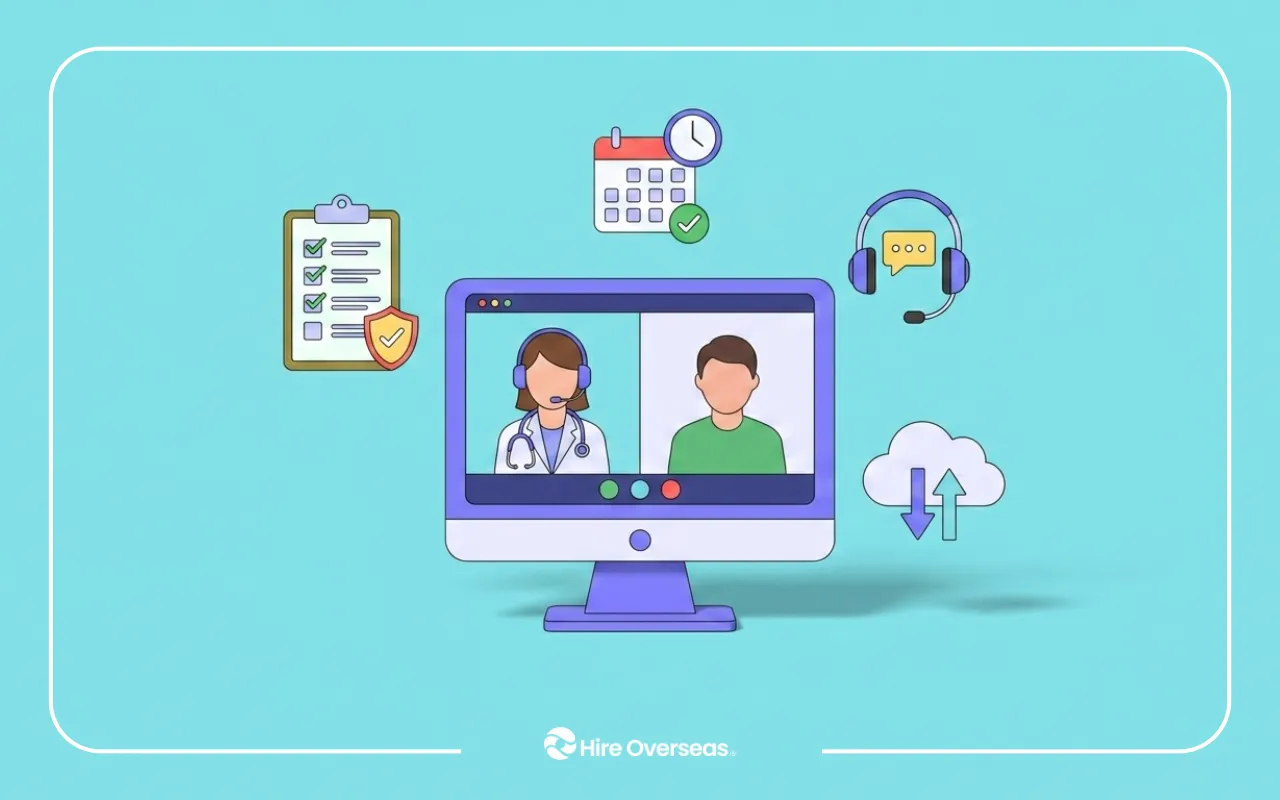
When telehealth first expanded, the focus was on technology—video platforms, virtual visits, and digital access. But as adoption grew, healthcare organizations discovered that virtual care created new operational demands, from patient intake and scheduling to insurance verification, triage support, and follow-up communication.
Technology enables telehealth, but it does not manage the workflows surrounding each patient interaction. As a result, the role of the telehealth virtual assistant has evolved beyond administrative support to become an important part of modern care delivery, helping providers improve efficiency, patient experience, and scalability.
Telehealth Growth Actually Created New Operational Challenges
One of the biggest misconceptions about telehealth is that virtual care automatically reduces administrative work. In reality, many healthcare organizations found that telehealth simply changed where the work happens. While providers no longer needed physical exam rooms for every appointment, practices still needed to manage scheduling, patient communication, intake documentation, insurance verification, technology troubleshooting, and post-visit follow-up. As virtual care expanded, these responsibilities often grew alongside patient volume.
Virtual Visits Still Required Extensive Patient Coordination
Every telehealth appointment involves multiple administrative touchpoints before a provider ever joins the consultation. Unlike traditional in-person visits, patients often need guidance not only with healthcare-related processes but also with the technology required to access care. Even a simple virtual appointment can involve several steps that must be completed accurately and on time to avoid delays or missed visits.
Patients may need assistance with:
- appointment scheduling
- registration
- intake forms
- insurance verification
- consent documentation
- platform access instructions
In addition, many patients require reminders, troubleshooting support, or answers to questions before their appointment begins. For elderly patients, individuals with limited technical experience, or those navigating complex care plans, these interactions can be especially important. Many healthcare leaders initially assumed existing administrative teams could absorb these responsibilities. However, as virtual visit volumes increased, patient coordination often became a full-time operational function of its own. What appears to be a simple video consultation frequently depends on a series of behind-the-scenes tasks that ensure patients are prepared, providers have the necessary information, and appointments run smoothly.
Healthcare Providers Started Managing Administrative Workflows
As a result of the growing coordination demands surrounding virtual visits, many providers find themselves taking on responsibilities that were never meant to be part of their clinical role. We recently spoke with a prospect who initially believed he could manage his telehealth operations on his own. Since he wasn't seeing patients in a traditional office setting, he assumed scheduling, patient communication, intake follow-ups, and appointment coordination would be manageable alongside his clinical work. Over time, however, the administrative workload continued to grow. Between answering patient messages, helping patients navigate telehealth platforms, coordinating appointments, and handling follow-up tasks, he realized he was spending more time managing operations than actually delivering care. The challenge was not a lack of patients or even a lack of clinical capacity. It was a lack of operational support surrounding the provider.
As telehealth programs mature, many organizations reach a similar conclusion: clinicians create the most value when they focus on patient care, while dedicated support staff manage the coordination work that keeps virtual care running smoothly.
For healthcare providers who have reached that same turning point, this breakdown of when virtual assistant outsourcing becomes necessary identifies the operational signals that indicate dedicated support has moved from optional to essential — and what changes once that support is properly structured.
Telehealth Increased the Number of Patient Touchpoints
One unexpected consequence of telehealth growth is that patient communication often becomes more frequent, not less. In a traditional office setting, many questions and administrative tasks can be handled during a single visit. With telehealth, however, patient interactions are often spread across multiple digital touchpoints before and after the appointment itself.
Patients may require:
- appointment reminders
- pre-visit instructions
- technology support
- follow-up communication
- prescription coordination
- referral management
For example, a patient may need help accessing the telehealth platform before their appointment, clarification about required forms, and follow-up guidance after the consultation has ended. Each of these interactions contributes to a smoother patient experience, but they also create additional administrative workload for the organization.
Without dedicated support, these responsibilities frequently become distributed across providers, office staff, and clinical teams, making workflows less efficient and increasing the risk of delays or missed communications.
For healthcare organizations where patient communication has become distributed across multiple people without clear ownership, this guide on what happens when front-office communication outgrows existing systems explains how dedicated reception support creates the consistency and responsiveness that fragmented workflows rarely can — particularly for practices managing high volumes of scheduling, reminders, and intake across multiple channels.
Telehealth Success Depended on the Patient Experience
Many healthcare organizations initially evaluate telehealth success based on provider adoption, technology implementation, or visit volume. Patients often evaluate it differently. For patients, the experience begins long before the video call starts. Their perception of care is shaped by how easy it is to schedule an appointment, complete intake requirements, receive timely responses, and navigate the virtual visit process. Even small operational issues can create frustration and reduce confidence in the overall care experience. Delays, scheduling issues, unanswered messages, and intake bottlenecks can negatively affect patient satisfaction even when clinical care is excellent.
We've observed that many of the most successful telehealth programs recognize that virtual care success depends on more than clinical outcomes alone. It also depends on delivering a seamless patient experience from the first interaction through follow-up care. This is why leading organizations invest just as heavily in patient coordination and operational support as they do in telehealth technology itself.
The New Role of a Telehealth Virtual Assistant in Modern Care Delivery
As telehealth has matured, the role of virtual assistants has expanded far beyond basic administrative support. While early telehealth assistants primarily handled scheduling and routine patient inquiries, today's telehealth virtual assistants help coordinate patient interactions, support care workflows, and manage operational processes across virtual care programs. As organizations expand telehealth, remote patient monitoring, and digital health services, virtual assistants have become an important part of the infrastructure that supports both providers and patients throughout the care journey.
From Scheduling Support to Patient Coordination
Early telehealth support roles primarily focused on appointment scheduling and calendar management. Today, telehealth virtual assistants often function as patient coordinators who guide individuals through multiple stages of care.
Responsibilities may include:
- appointment scheduling
- patient onboarding
- intake management
- referral coordination
- follow-up communication
- care navigation
This shift reflects the growing complexity of virtual care delivery. As telehealth programs expand, patients often interact with multiple departments, providers, and digital systems throughout their care journey. Virtual assistants help ensure information is communicated accurately, appointments stay organized, and patients understand the next steps in their care. For many healthcare organizations, patient coordination has become just as important as the virtual visit itself.
A smooth experience before and after the appointment can significantly influence patient satisfaction, engagement, and continuity of care.
From Basic Intake Support to Specialized Triage Coordination
Many healthcare organizations now use telehealth virtual assistants to support patient triage workflows. While virtual assistants do not provide clinical advice, they often help gather information, document symptoms, route patient inquiries, and ensure providers receive appropriate context before consultations occur. A telehealth virtual assistant for triage support can help practices improve response times while creating a more organized patient intake process. By helping direct inquiries to the appropriate provider or department, virtual assistants support more efficient communication and reduce delays that can occur when patient requests are not properly routed.
As patient volumes grow, this coordination role becomes increasingly valuable.
From Administrative Assistance to End-to-End Care Journey Support
Modern virtual medical assistants often support workflows that extend far beyond appointment scheduling. Depending on the organization, responsibilities may include:
- patient intake
- insurance verification
- prior authorization support
- care coordination
- prescription refill requests
- referral tracking
- patient communication
We've observed that many healthcare organizations now view virtual medical assistants as operational extensions of their care teams rather than standalone administrative resources. These professionals often support multiple stages of the patient journey, helping ensure administrative processes move forward efficiently while reducing the workload placed on providers and in-house staff.
As healthcare organizations continue expanding virtual care services, the ability to coordinate communication, documentation, and patient follow-up across multiple workflows has become increasingly important.
For organizations where workflow bottlenecks keep reappearing despite expanded telehealth adoption, this guide on how outsourced administrative roles eliminate structural inefficiencies explains how to restructure coordination responsibilities across intake, documentation, and follow-up before and after bringing dedicated remote support into the practice.
From Virtual Visits to Ongoing Remote Patient Monitoring Support
The growth of Remote Patient Monitoring (RPM) programs has introduced another layer of complexity to virtual care. RPM initiatives frequently require:
- patient outreach
- device coordination
- data collection support
- appointment scheduling
- ongoing communication
Unlike traditional telehealth visits, RPM programs often involve continuous engagement over extended periods of time. Patients may need assistance setting up monitoring devices, understanding reporting requirements, scheduling follow-up appointments, or responding to outreach from care teams. These ongoing interactions create administrative responsibilities that extend well beyond a single consultation.
As healthcare organizations expand chronic care management and remote monitoring programs, telehealth support assistants often play a critical role in keeping patients engaged and ensuring workflows remain organized. Their support helps maintain consistent communication, improve patient participation, and reduce the administrative burden associated with managing large populations of remotely monitored patients.
How Healthcare Leaders Can Build Telehealth Operations That Scale
As telehealth becomes a permanent part of care delivery, many healthcare organizations are asking a new set of questions. The challenge is no longer simply launching virtual care services. It is creating the operational infrastructure needed to support growing patient demand, maintain service quality, and reduce administrative strain on providers.
Based on what we're seeing across the healthcare industry, organizations that scale telehealth successfully tend to treat operational support as a strategic function rather than an afterthought.
Recognize When Telehealth Has Outgrown Existing Administrative Capacity
One of the most common inflection points occurs when telehealth programs begin handling higher patient volumes and more complex workflows. What starts as appointment scheduling and basic patient communication often expands into:
- patient intake coordination
- telehealth triage support
- insurance verification
- referral management
- prescription coordination
- remote patient monitoring support
- ongoing patient outreach
As these responsibilities accumulate, existing administrative teams may find themselves balancing telehealth demands alongside in-office operations and other priorities.
Our advice is to regularly assess whether telehealth-related tasks are consuming provider time or creating bottlenecks for patients. These are often early indicators that dedicated support may be needed.
Prioritize Consistency Across the Patient Experience
Telehealth patients expect the same level of responsiveness and coordination they would receive during an in-person visit. When communication responsibilities are spread across multiple team members, organizations may experience inconsistencies in follow-up, scheduling, and patient engagement. A dedicated telehealth support function can help create greater continuity by ensuring that patient-facing administrative tasks are managed through clear workflows and standardized processes. Over time, dedicated support professionals become familiar with:
- provider preferences
- patient communication standards
- scheduling workflows
- escalation procedures
- organizational processes
This familiarity often contributes to a more seamless patient experience while allowing providers to focus on clinical care.
Consider All Available Staffing Models
Healthcare leaders today have more options than ever when building telehealth support teams. In addition to local hiring, many organizations are exploring offshore staffing models to access healthcare support professionals with experience in telehealth operations, medical administration, and patient coordination. Countries such as the Philippines have developed strong talent pools that support:
- telehealth practices
- medical groups
- specialty clinics
- remote patient monitoring programs
- healthcare administrative workflows
At Hire Overseas, we've seen healthcare organizations use offshore staffing to build dedicated telehealth support functions that can scale alongside patient demand. Rather than viewing staffing decisions solely through a cost lens, we encourage healthcare leaders to evaluate which model best aligns with their operational goals, growth plans, and patient experience standards.
For practices that want to understand what a dedicated offshore telehealth support structure actually looks like in practice, this operational playbook for building and delegating to Filipino virtual assistant teams explains how healthcare organizations design remote support roles that eliminate scheduling bottlenecks and scale predictably alongside patient volume.
Evaluate Cost in the Context of Operational Outcomes
Questions about telehealth virtual assistant costs are common, especially as organizations look to expand support functions. Costs vary based on factors such as:
- experience level
- scope of responsibilities
- healthcare specialization
- hours required
- staffing model
While compensation differences between local and offshore staffing models can be significant, the more important consideration is overall operational impact. Healthcare leaders should evaluate whether additional support can help:
- reduce provider administrative workload
- improve patient responsiveness
- increase scheduling efficiency
- strengthen care coordination
- support future growth initiatives
In many cases, the value generated through improved operations outweighs the staffing investment itself.
For healthcare leaders comparing staffing options before committing to a model, this complete pricing breakdown for virtual assistant roles across experience levels and hiring structures shows how costs vary by scope, region, and specialization so organizations can benchmark realistically and plan budgets without surprises.
Build for Future Growth, Not Just Current Demand
Perhaps the most important advice we can offer is to think beyond today's telehealth needs. Virtual care continues to evolve, with many organizations expanding into remote patient monitoring, chronic care management, and other digitally enabled services.
As you evaluate support models, consider questions such as:
- Can the support structure accommodate increasing patient volumes?
- Does the team understand healthcare workflows and compliance requirements?
- Can support expand alongside new care delivery programs?
- Will providers gain more time for patient care?
- Does the model improve the overall patient experience?
The organizations best positioned for long-term success are those that build telehealth operations with scalability in mind from the beginning. By taking a proactive approach to support infrastructure, healthcare leaders can create a stronger foundation for both patient care and organizational growth.
For teams also exploring how AI and trained human professionals can collaborate within these expanding workflows, this look at how modern medical scribe services are evolving beyond purely human or purely automated models covers how combining automation with skilled remote staff improves documentation quality and reduces the administrative burden placed on providers across virtual care settings.
The Future of Telehealth Is About More Than Virtual Visits
One of the more interesting shifts in healthcare is that telehealth is changing where care happens, but it is also changing who supports it. The telehealth virtual assistant is one of the clearest examples of this shift. What was once viewed primarily as scheduling and administrative support has evolved into a role that helps coordinate patient journeys, support care workflows, and connect providers, patients, and technology throughout the virtual care experience. As telehealth continues to mature, the organizations that recognize this evolution will be better positioned to build scalable, patient-centered care models.
As the role of the telehealth virtual assistant continues to evolve, healthcare organizations have an opportunity to build stronger support systems around both providers and patients. If you're ready to expand your telehealth operations, schedule a discovery call with Hire Overseas to explore building a dedicated support team designed to improve care coordination, strengthen patient experiences, and support sustainable growth.
Data and information referenced in this article were sourced from the American Medical Association (AMA), Centers for Medicare & Medicaid Services (CMS), and peer-reviewed healthcare research publications.
