



Real Estate Virtual Assistant: How Top Agents and Investors Actually Scale
A real estate virtual assistant is no longer a nice-to-have. It is a core operating lever for agents, brokers, and investors who want consistent growth without adding local overhead.
Top-producing teams use virtual assistants in real estate to protect focus, increase deal flow, and build systems that scale. The difference is not delegation alone. It is how and where that delegation is done.
This guide shows how top agents and investors use real estate virtual assistants to build leverage, what roles create the highest ROI, how pricing really works, and how to hire for long-term execution.
What Is a Real Estate Virtual Assistant?
A real estate virtual assistant is a remote professional who supports daily operations across admin, marketing, lead management, and transaction coordination. Their role is to remove execution work so agents and investors can focus on revenue-producing activities.
A virtual assistant for real estate agents works inside your systems, follows your processes, and represents your brand. When structured correctly, they function as an extension of your in-house team.
This is not generic VA work. Real estate virtual assistance requires industry context, CRM discipline, and deal-stage awareness. Without clear role ownership, defined workflows, and accountability, even the best virtual assistant in real estate will underperform.
What Does a Real Estate Virtual Assistant Do?
The value of a real estate assistant virtual role depends on task selection. High-performing teams do not delegate everything. They assign work that removes distractions from the agent while increasing speed, consistency, and follow-through.
A real estate virtual assistant is most effective when they own repeatable execution. This creates operational stability and prevents important tasks from falling through the cracks.
Administrative support
Administrative work is often the first bottleneck in a growing real estate business. A virtual real estate assistant keeps systems organized and reduces decision fatigue by handling:
- CRM cleanup, tagging, and contact management
- Calendar scheduling and inbox management
- Listing input, MLS coordination, and status updates
- Document preparation and compliance checks
Sales and lead support
Speed to lead and consistent follow-up directly impact conversion. A virtual assistant for real estate agents supports the front end of the pipeline by:
- Virtual assistant real estate lead generation follow-up
- Real estate cold calling virtual assistant outreach
- Text and email nurture campaigns
- Appointment setting and pipeline tracking
Marketing execution
Marketing breaks down when execution is inconsistent. A real estate marketing virtual assistant ensures campaigns actually run by managing:
- Social media posting and engagement
- Listing promotion and email newsletters
- CRM automation and campaign setup
- Database reactivation and audience segmentation
Transaction coordination
As deal volume increases, missed deadlines become costly. A real estate assistant virtual role supports smooth closings through:
- Contract-to-close task tracking
- Communication with lenders, title, and escrow
- File management and deadline monitoring
These responsibilities form the foundation of most real estate virtual assistant duties and job descriptions. When clearly defined, they turn a virtual assistant from task support into a force multiplier for the business.
Virtual Assistants for Different Real Estate Roles
Not all real estate professionals need the same support. Task alignment matters more than headcount.
Virtual Assistant for Real Estate Agents and Realtors
A real estate agent virtual assistant focuses on follow-ups, CRM hygiene, listings, and marketing execution. This frees agents to focus on showings, negotiations, and relationship building.
Many teams start with one virtual assistant for realtors and expand into specialized roles later.
Virtual Assistant for Real Estate Investors
A real estate investor virtual assistant handles lead intake, property research, skip tracing, and follow-up. For wholesalers, a wholesale real estate virtual assistant often manages cold outreach and pipeline updates.
This role is critical for volume-based investing models where speed and consistency win deals.
Commercial Real Estate Virtual Assistant
A commercial real estate virtual assistant supports deal research, database management, financial data organization, and broker outreach. Precision and confidentiality matter more than volume.
Commercial real estate shares many operational demands with legal teams.
Read more: How Lawyers Use Virtual Assistants for High-Precision Work
Real Estate Virtual Assistant Rates: What You’re Really Paying For
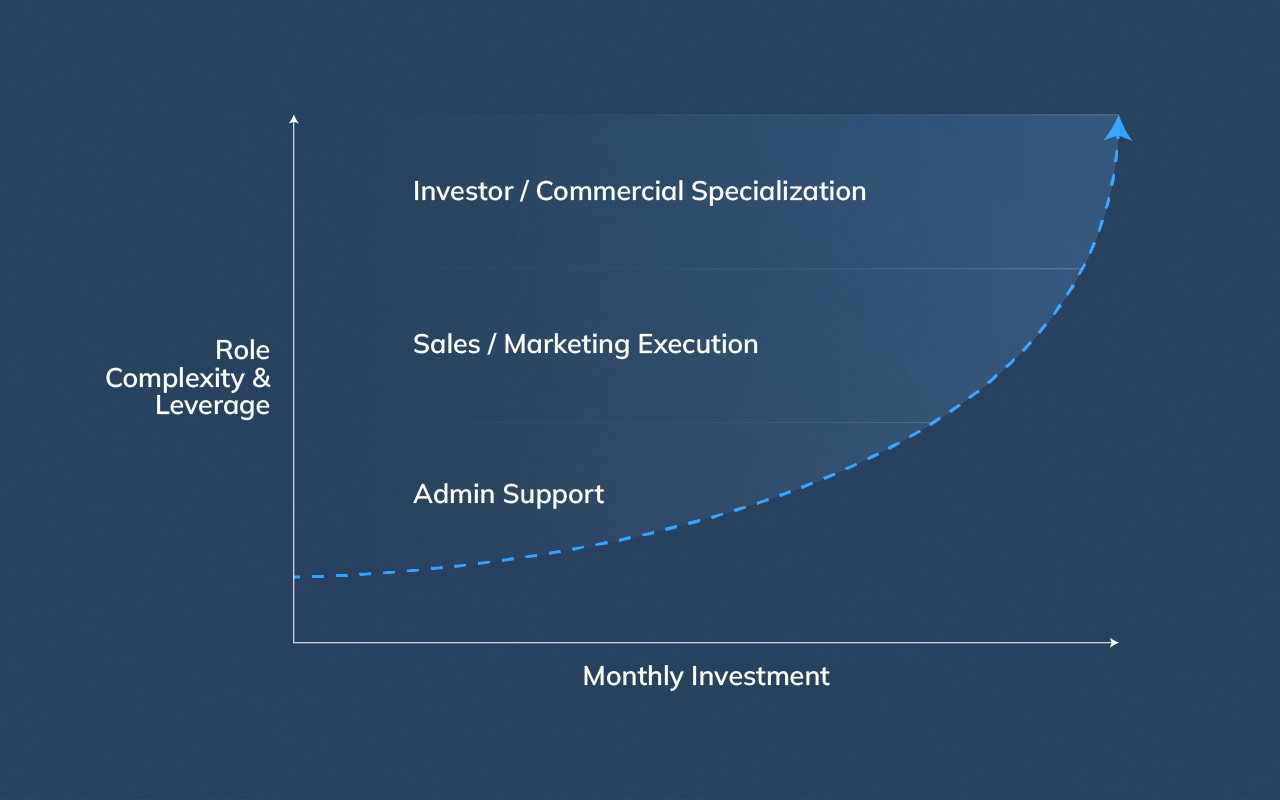
Real estate virtual assistant rates vary widely, but the biggest cost driver is not location or experience. It is how the assistant is hired and managed.
Most professional real estate virtual assistants fall into these monthly ranges when working full time:
Typical Real Estate Virtual Assistant Cost Ranges
- Admin-focused support: $800–$1,200 per month
This covers inbox and calendar management, CRM cleanup, listing input, and basic transaction coordination support. These roles work best for agents who need operational relief but still handle sales and marketing themselves. - Sales or marketing-focused support: $1,200–$1,800 per month
This tier includes lead follow-up, appointment setting, virtual assistant real estate lead generation, CRM automation, and campaign execution. A real estate marketing virtual assistant or real estate cold calling virtual assistant typically falls into this range. - Specialized investor or commercial support: $1,800–$2,500 per month
Real estate investor virtual assistants, wholesale real estate virtual assistants, and commercial real estate virtual assistants command higher rates because they require deal knowledge, data accuracy, and tighter execution standards.
Hiring Direct vs Using a Real Estate Virtual Assistant Agency
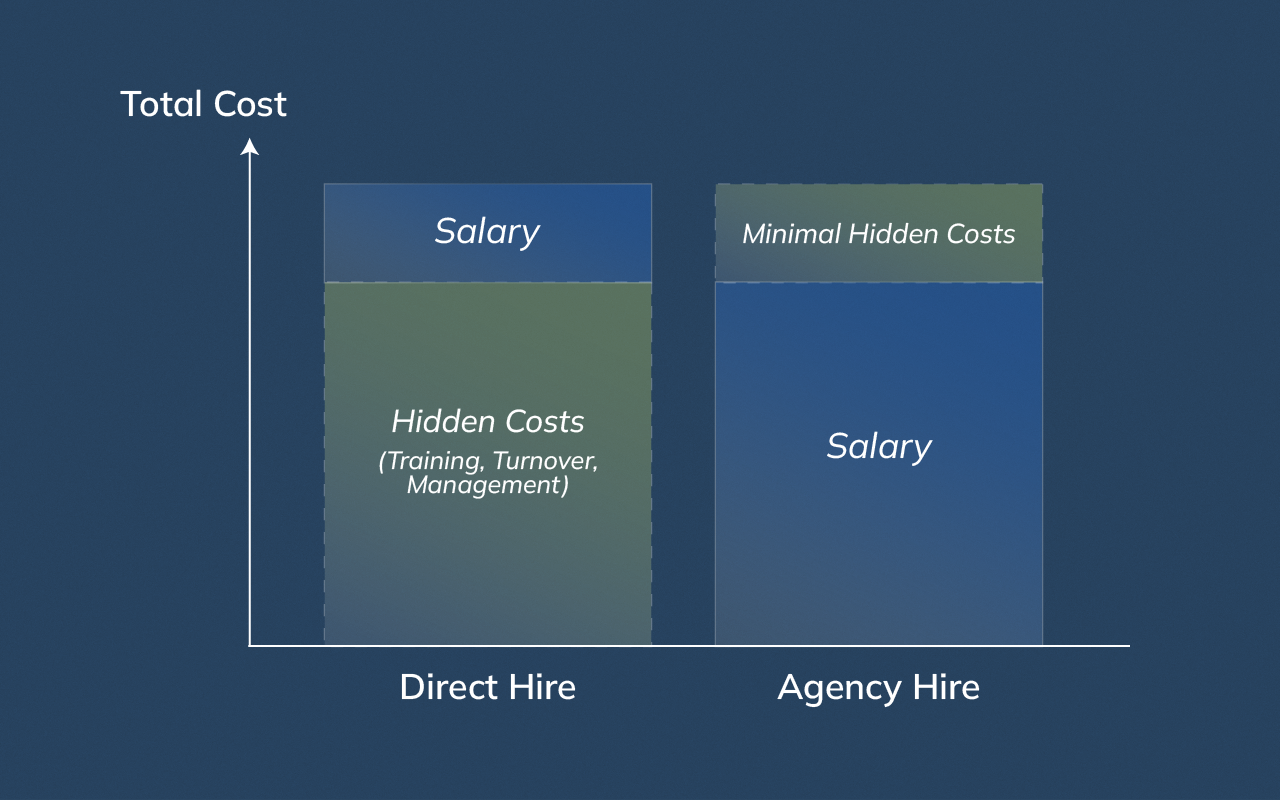
This is where pricing differences start to make sense.
Hiring a Real Estate Virtual Assistant Directly
Hiring directly usually looks cheaper on paper. You pay the assistant’s salary and little else.
However, direct hiring often includes hidden costs:
- Recruiting and screening time
- Real estate-specific training
- Payroll, compliance, and HR management
- Risk of turnover and rehiring
Direct hiring works best for teams with strong internal systems and management capacity.
Hiring Through a Trusted Virtual Assistant Agency
Real estate virtual assistant services cost more upfront because agencies absorb operational risk.
Agency pricing typically includes:
- Pre-vetted and trained real estate VAs
- Ongoing HR, payroll, and compliance
- Performance oversight and replacement support
- Long-term retention systems
For most agents and growing teams, agencies reduce management load and failure risk, even if the monthly rate is higher. The trade-off is paying slightly more in exchange for stability, continuity, and long-term execution.
The Real Cost Most Teams Overlook
The biggest expense in virtual assistance is not salary. It is:
- Poor onboarding and unclear ownership
- Assigning too many responsibilities to one role
- Inconsistent management and feedback
- High turnover caused by short-term hiring
The goal is not the lowest real estate virtual assistant rate. It is the highest return per hour delegated.
When structured correctly, a real estate virtual assistant is not an expense.
It is operational infrastructure that compounds over time.
Location affects cost, communication style, and availability.
Read more: Philippines vs Latin America Virtual Assistants
Best Real Estate Virtual Assistant Companies: How to Choose What Fits Your Stage
Not every real estate virtual assistant company is built for the same purpose. Some are designed for speed and flexibility. Others are built for long-term role ownership and scale.
This short list highlights well-known options and explains where each one fits best, so you can choose based on how your business operates today and where it is heading.
1. Hire Overseas – Best for Long-Term Scale and Role Ownership
Best for: Agents, teams, and investors who want dependable operators, not short-term task coverage.
Hire Overseas focuses on building role-based real estate virtual assistants that integrate into your systems and stay aligned as your business grows.
Why it stands out
- Real estate–specific hiring and training
- Dedicated, full-time assistants
- Ongoing HR, performance, and retention support
- Built for continuity, not short-term execution
Hire Overseas works best when you want a real estate assistant virtual role that compounds in value instead of restarting every few months.
2. Summit VA Solutions – Best for Real Estate-Specific Training
Best for: Teams that want VAs trained upfront on real estate tools and processes.
Summit emphasizes real estate education and software familiarity, which can reduce onboarding time for agents who already have defined workflows.
The trade-off is less flexibility and limited pricing transparency.
3. MyOutDesk – Best for Established Teams Needing Broad Coverage
Best for: Larger teams that need support across admin, sales, and marketing.
MyOutDesk offers structured onboarding and experienced VAs, but typically at a higher monthly cost and with less role customization.
4. Virtudesk – Best for Task-Specific Support
Best for: Agents who want clearly defined service categories.
Virtudesk’s task-based pricing works well for focused needs, but may feel fragmented as responsibilities expand.
5. TaskBullet – Best for Short-Term or Trial Use
Best for: Agents who want flexibility without long-term commitment.
TaskBullet allows quick access to VA support but does not emphasize real estate specialization or long-term role ownership.
Want a broader breakdown of the top virtual assistant providers across industries?
Read more: Top Virtual Assistant Companies Compared
Hire Overseas Insider: When You Actually Need a Real Estate Virtual Assistant and How to Choose the Right One
After thousands of real estate hires across solo agents, high-volume teams, and investors, one pattern shows up consistently.
Real estate virtual assistants do not fail because of location, skill, or cost. They fail because the business hires them at the wrong moment or for the wrong reason.
How to Know You Are Ready for a Real Estate Virtual Assistant
A real estate virtual assistant is most effective when there is already motion in the business. They amplify output. They do not create it from nothing.
You are likely ready if:
- Leads are coming in but follow-up is delayed or inconsistent
- Admin work regularly pulls you out of sales, sourcing, or negotiations
- Marketing and CRM tasks exist but are not executed reliably
- Growth feels chaotic instead of controlled
If there is no repetition yet, a VA will feel underutilized. If there is too much chaos, they will feel overwhelmed. The ideal moment is when work is repeatable but execution is stretched.
Choosing the Right Real Estate Virtual Assistant Based on Your Operating Model
The best real estate virtual assistant is not the cheapest or the most skilled on paper. It is the one aligned to how your business actually runs.
Before hiring, define these elements clearly.
- Role ownership vs task coverage: If you want consistency and improvement over time, hire for a single role with ownership. Task coverage works only for short-term or non-core work.
- Growth trajectory: If the role is meant to expand as volume increases, hire someone capable of learning systems and improving processes. If the need is temporary, prioritize speed and flexibility.
- Process maturity: Virtual assistants perform best inside documented workflows. If steps are unclear, expect early friction. Documenting processes before hiring shortens ramp time dramatically.
- Accountability structure: Decide how success is measured before day one. Weekly output reviews, response-time benchmarks, and accuracy checks prevent drift.
The Most Common Hiring Mismatch We See
Most hiring failures come from assigning too much, too fast.
Agents often hire one real estate virtual assistant and expect them to handle admin, marketing, lead generation, and transactions at once. The result is scattered execution and unclear ownership.
Strong operators do the opposite. They start narrow. They stabilize one role. Then they expand.
Why We Recommend Hiring a Real Estate Virtual Assistant Long Term
Short-term virtual assistant hires often feel productive at first, but they rarely deliver lasting leverage. Long-term hiring is where real value is created.
When a real estate virtual assistant stays in the role, they begin to understand your pipeline, your clients, and your standards. Execution becomes faster, cleaner, and more proactive over time.
We consistently see better outcomes when teams:
- Hire for a stable, clearly defined role
- Invest in onboarding and early training
- Review performance on a regular cadence
- Allow the VA to improve processes, not just follow instructions
Long-term real estate virtual assistants stop functioning as task support. They become part of the operating system.
That is why we recommend hiring with continuity in mind. It minimizes turnover, reduces management friction, and builds leverage that compounds instead of restarting every few months.
Reliability matters more than speed or cost when hiring a VA.
Read more: How to Hire a Reliable Virtual Assistant
The First 90 Days: How Top Teams Turn a Real Estate Virtual Assistant Into Leverage
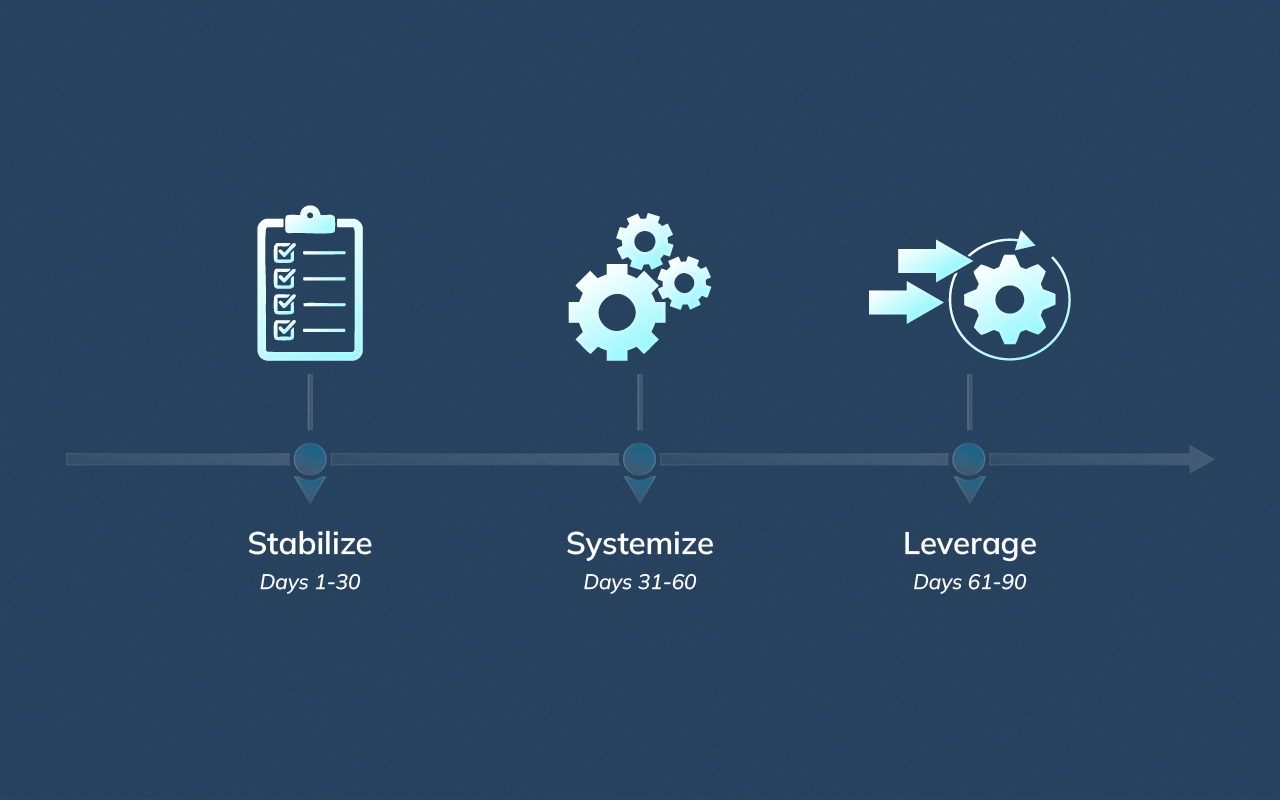
Most real estate virtual assistant failures happen early. Not because the hire was wrong, but because the first 90 days were treated casually.
Top-performing agents and investors approach the first three months as an investment window. This is where clarity, habits, and leverage are built.
Days 1–30: Stabilize the Role
The goal of the first month is stability, not speed.
Assign one clearly defined role with a small set of repeatable tasks. This allows the real estate virtual assistant to learn expectations, tools, and quality standards without noise.
What matters most in this phase:
- Accuracy over volume
- Response time and follow-through
- Comfort inside your CRM and systems
Success looks like work getting done correctly without constant correction.
Days 31–60: Systemize Execution
Once execution is stable, the focus shifts to systems.
In this phase, the virtual assistant begins documenting workflows, identifying bottlenecks, and reducing back-and-forth communication. They start understanding not just what to do, but why it matters in the pipeline.
What improves during this phase:
- Fewer dropped tasks
- Clearer handoffs between stages
- Faster turnaround with less oversight
This is where the role starts to feel dependable instead of reactive.
Days 61–90: Create Leverage
By the third month, leverage starts to appear.
The real estate virtual assistant begins anticipating needs, catching issues before they escalate, and executing with context. At this stage, agents and investors feel time returning to them.
Indicators of real leverage:
- Tasks move forward without reminders
- Execution quality stays consistent during busy periods
- The agent is no longer the bottleneck
The Key Insight Most Teams Miss
Leverage is not immediate. It is built through continuity.
Teams that expect instant relief often churn through virtual assistants. Teams that commit to clarity, feedback, and long-term roles almost always outperform.
When the first 90 days are treated intentionally, a real estate virtual assistant stops being extra help and starts becoming leverage that compounds as the business grows.
Is a Real Estate Virtual Assistant Worth It?
A real estate virtual assistant is not about saving a few hours. It is about building leverage into your business.
If you are still managing follow-ups, listings, marketing execution, or admin yourself, growth will always feel heavier than it should. Not because you are doing something wrong, but because the business is still dependent on you for execution.
Whether you need a virtual assistant for real estate investors, a virtual real estate receptionist, or a dedicated operator embedded in your systems, the model works when it is built intentionally and hired for continuity.
The real question is not whether to use a VA for real estate.
It is whether you are ready to build a business that runs with you, not because of you.
Hire Overseas exists for teams that are ready to make that shift.
If you want to see what a role-based, long-term real estate virtual assistant model looks like in practice, book a demo today.
Leverage is not added by accident. It is designed.
Frequently Asked Questions About Real Estate Virtual Assistants
How many hours per week should a real estate virtual assistant work?
Most high-performing teams hire a real estate virtual assistant full time (40 hours per week). This allows the VA to fully own a role, understand deal context, and improve execution over time. Part-time arrangements can work for narrow, clearly defined tasks, but they limit long-term leverage and accountability.
Can a real estate virtual assistant talk directly to clients and leads?
Yes, when properly trained and positioned. Many teams use virtual assistants to handle inbound lead responses, follow-up messages, appointment setting, and client updates. The key is clear scripts, brand guidelines, and defined boundaries for when conversations are handed off to the agent.
Is a real estate virtual assistant better than hiring a local assistant?
For most agents and investors, yes. Virtual assistants offer lower fixed costs, broader talent access, and easier scalability without local payroll, office space, or employment overhead. The trade-off is that success depends more on systems, documentation, and communication discipline.
What tools should a real estate virtual assistant already know?
A strong real estate virtual assistant should be comfortable with common industry tools such as CRMs (Follow Up Boss, kvCORE, Salesforce), MLS platforms, Google Workspace, email marketing tools, and basic task management systems. Tool familiarity matters, but process discipline matters more.
Can one real estate virtual assistant support multiple agents?
This is possible but rarely ideal. Shared VAs often lead to blurred priorities and slower turnaround times. High-performing teams typically assign one virtual assistant to one primary operator or role, then add additional assistants as volume increases.
What tasks should never be delegated to a real estate virtual assistant?
Anything that requires licensed activity, final negotiation authority, or strategic decision-making should remain with the agent or investor. Virtual assistants execute processes; they do not replace professional judgment or licensed responsibilities.
